
Beyond the Socket : How Modern Power Tracks are Redefining Smart Living
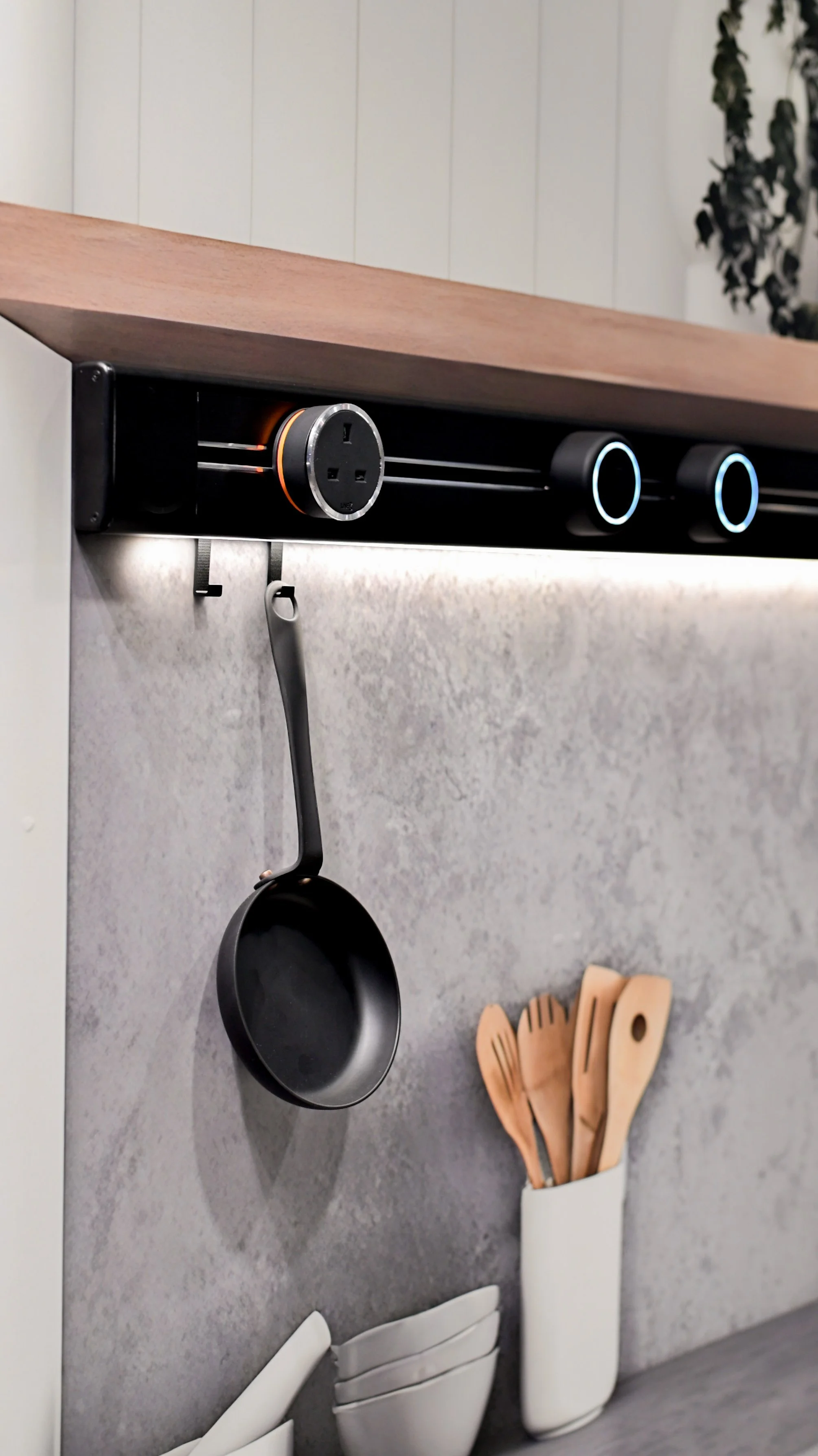
Power tracks have evolved far beyond basic electrical conduits to become comprehensive hubs for modern smart living. Leading this charge is Line8's new Model SL and TL Series, which transform the traditional power track by integrating ambient museum-grade LED lighting and a modular accessory rail for maximum utility. Unlike generic OEM rebrands that quickly become outdated, Line8’s vertically integrated, Singapore-based manufacturing ensures your system is future-proof. With a growing ecosystem of interchangeable smart adaptors—from mmWave sensors to GaN chargers—Line8 guarantees long-term compatibility, support, and continuous innovation for your space.
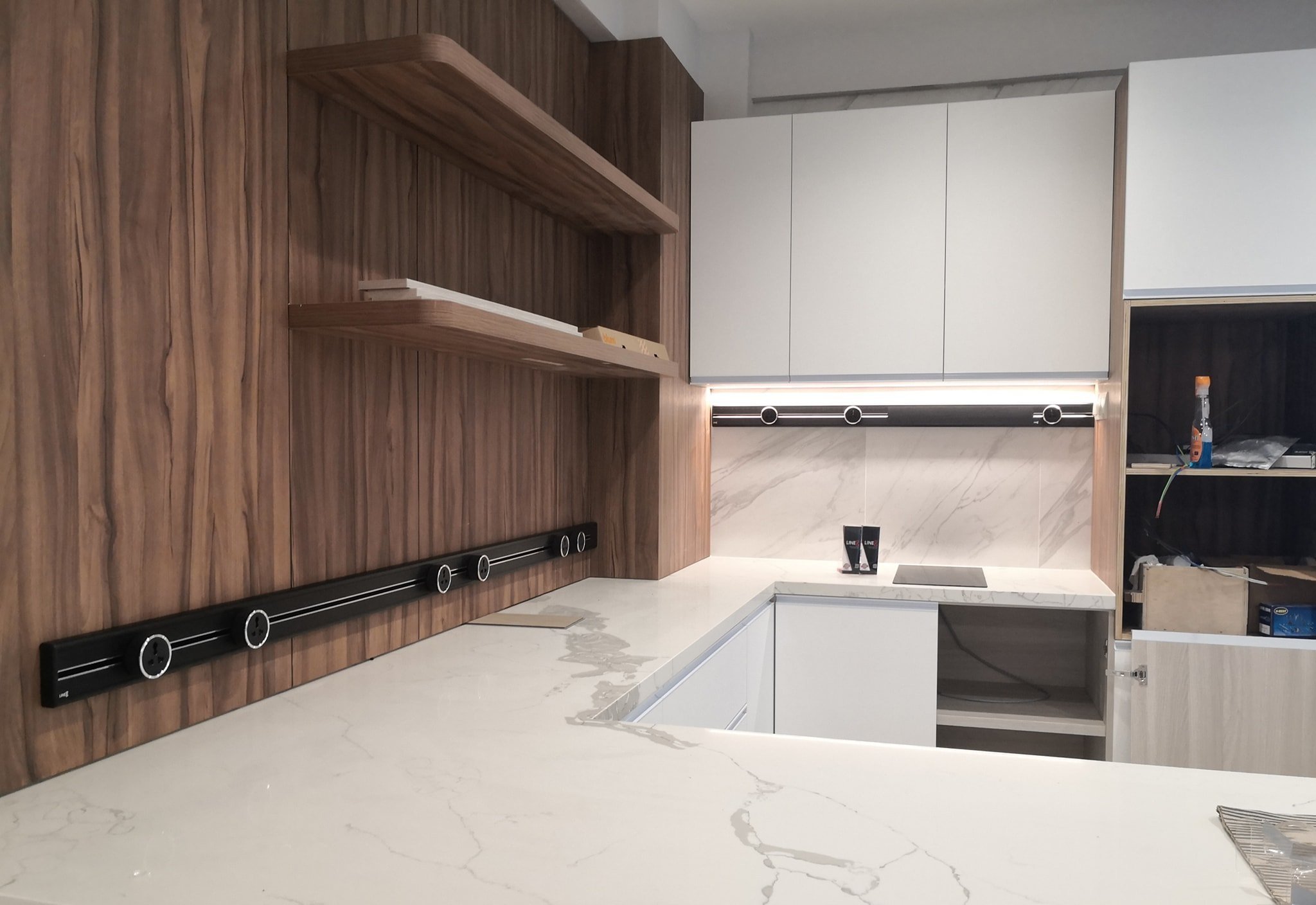
Not too long ago, installing a power track was a purely utilitarian decision. The goal was simple: distribute electricity and give yourself the flexibility to move sockets around without tearing into drywall.
But the landscape of home and office infrastructure has fundamentally shifted. Today, a convenient way to tap off power is no longer enough. The power track has evolved from a basic electrical conduit into a comprehensive hub capable of powering lights, cameras, USB chargers, and entire smart home ecosystems.
When planning your space, the question is no longer just where you need power, but what that power source can deliver overall.
Leading the Charge: The Model SL and TL Series
At the forefront of this evolution is the Line8 ecosystem. With the introduction of our new Model SL (Surface Light) and Model TL (Triangle Light) Series, we are pushing the boundaries of what a track system can achieve.
These models were engineered to be way beyond just a power track. We've introduced dual-purpose functionality that integrates directly into the architecture of your room:
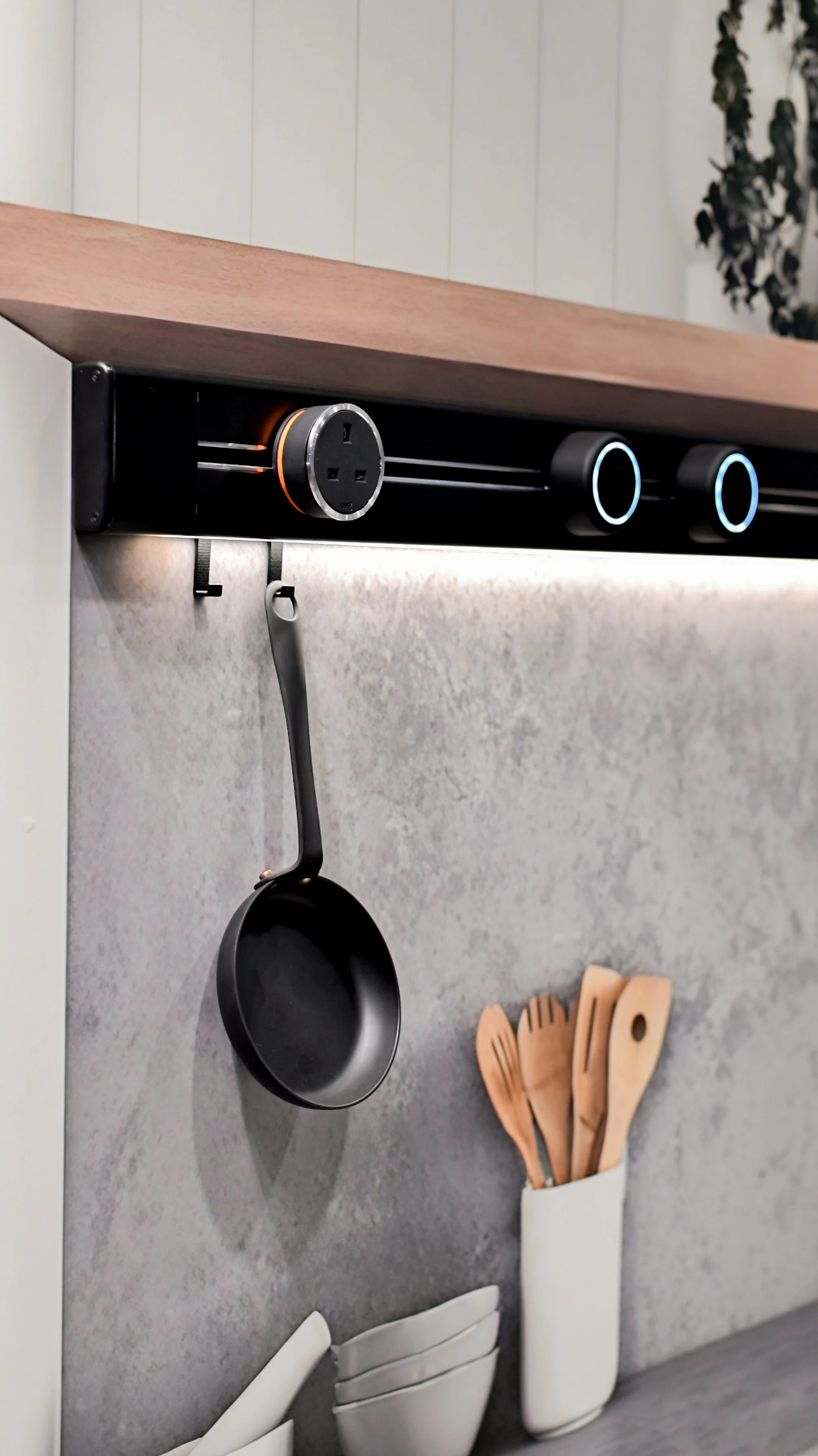
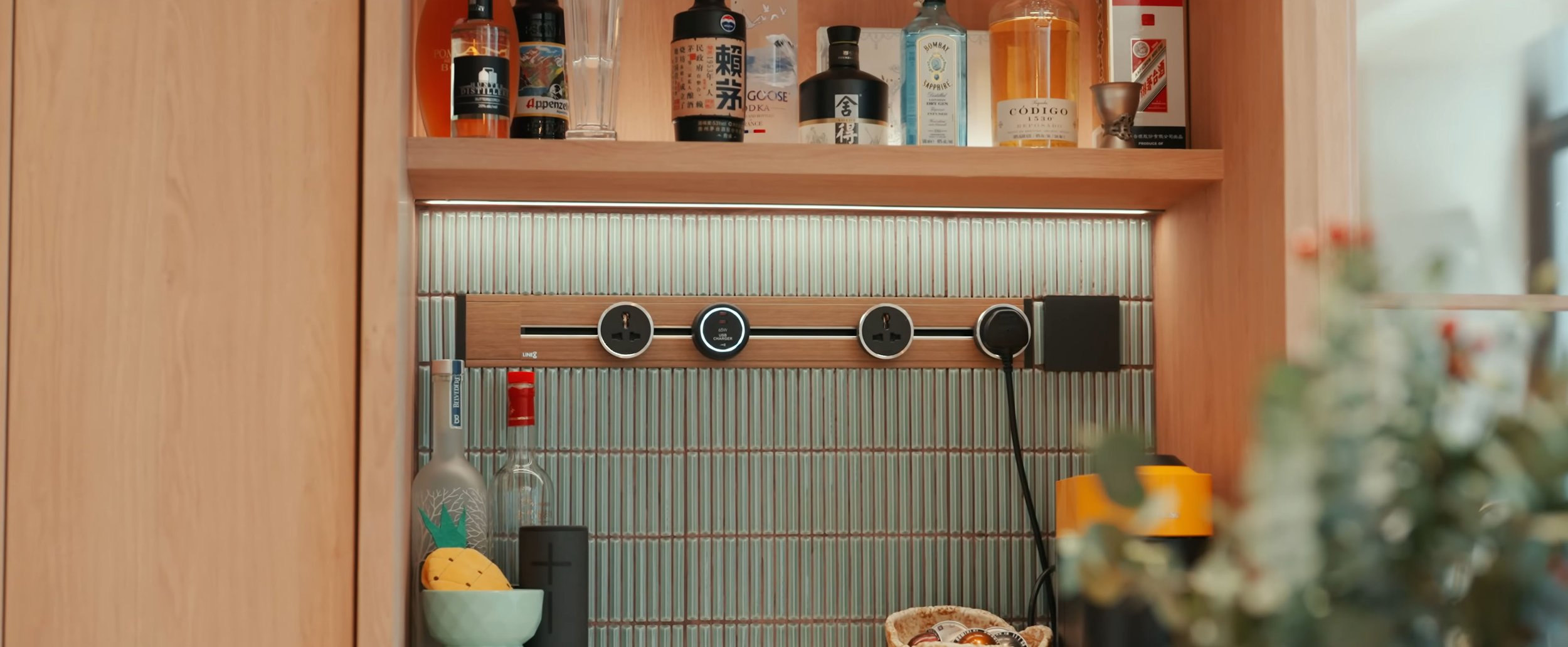
- Integrated Ambient Lighting: Both the SL and TL tracks feature an ambient light option along the bottom. Equipped with a COB 4000K museum-grade, high-CRI LED, the track itself becomes a premium architectural lighting fixture, eliminating the need for separate under-cabinet lighting.

- The Accessory Rail: We designed a built-in modular rail system. You can now attach hooks, bars, or even a pegboard directly to the track. Whether you need a kitchen towel holder, an accessory tray, or organizational clips, the track adapts to your workflow.
An Ecosystem of Feature Adaptors
The true potential of a modern power track lies in what you can plug into it. Beyond standard power sockets, Line8 has developed a wide array of feature adaptors that turn your track into a smart home foundation:
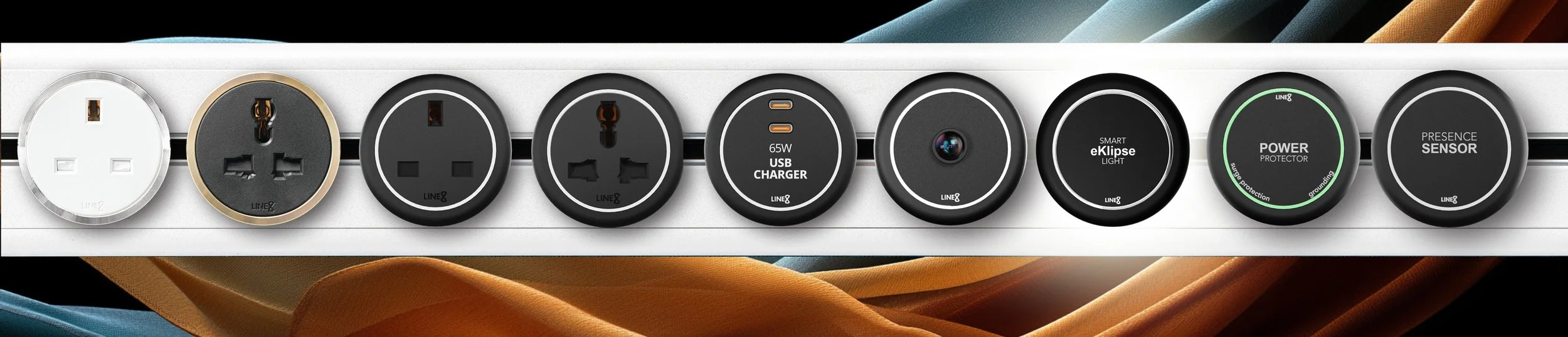
- Smart Sensing: Plug-and-play mmWave radars for highly accurate presence detection.
- Security: Track-powered cameras that can be repositioned anywhere without running new cables.
- Connectivity: Direct GaN USB-C chargers for a cleaner workspace without bulky power bricks.
- Smart Lighting: Dedicated lighting adaptors that snap right into your existing infrastructure.
Why Vertical Integration Matters (The OEM Problem)
When choosing a power track, future-proofing should be your top priority.
The market is currently flooded with OEM rebrands—imported products that are simply white-labeled by local sellers. These are strictly "what you see is what you get" systems. Because the seller doesn't actually manufacture the product, there is zero future development. When technology changes, or when you need a spare part in five years, the support simply won't be there.
| Generic OEM Tracks | The Line8 Ecosystem | |
|---|---|---|
| Development | Static ("What you see is what you get") | Continuous in-house innovation |
| Manufacturing | Outsourced, imported parts | Vertically integrated in Singapore |
| Compatibility | Outdated when new tech arrives | Backward and forward compatible |
| Support | Limited to current inventory | Guaranteed spare parts and upgrades |
Because Line8 builds our own tracks and accessories, our entire operation is vertically integrated. We control the engineering, the machining, and the long-term roadmap. When we develop a new technology or accessory years from now, you can be absolutely certain it will fit properly and be fully compatible with the Line8 track you install today.
Your home infrastructure shouldn't be disposable. Look at our track record of innovations over the years—when you invest in Line8, you are choosing a system that is always ready to be updated, upgraded, and adapted to whatever the future holds.
Balancing Performance and Design: The Engineering Behind Line8
Integrating robust electrical power into a minimalist home is a modern design challenge. Line8 bridges the gap between heavy-duty performance and aesthetic harmony by engineering power tracks from the ground up. By utilizing premium, heat-resistant materials and maintaining a meticulously slim profile, Line8 delivers a comprehensive, modular power foundation built on refined, hidden performance.
Balancing Performance and Design: The Engineering Behind Line8
How intentional design allows advanced power tracks to blend seamlessly into modern interiors.
When planning a home renovation, integrating a robust electrical system often presents a design challenge. Traditionally, heavy-duty electrical components carry a commercial appearance, leading to the assumption that high-performance power tracks must look out of place in a modern, minimalist home.
At Line8, our approach focuses on architectural integration. We engineer our power tracks to function as deliberate, slim architectural elements that blend into your interior design while housing a highly capable electrical foundation.
The Model SL: Dense Engineering in a 25mm Profile
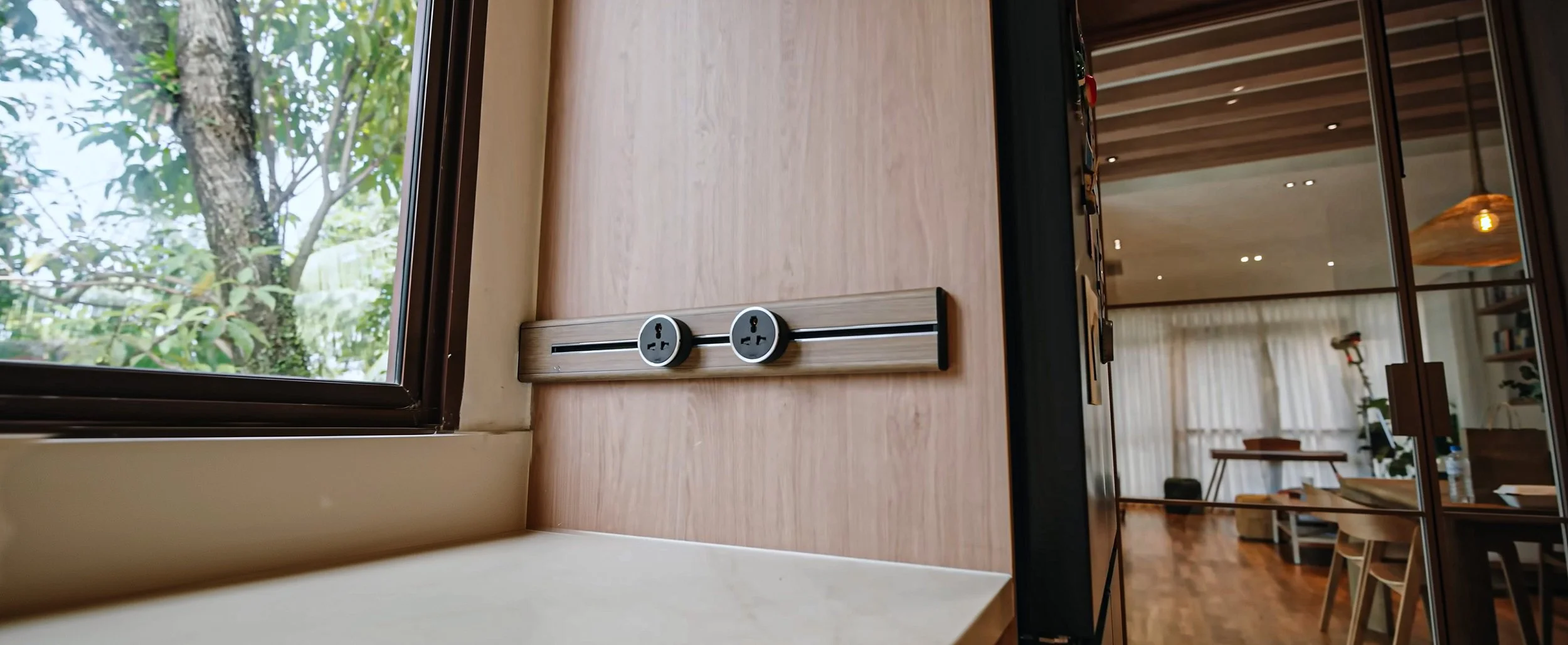
Our surface-mounted track, the Model SL, exemplifies this balance. At 25mm thick, it maintains an exceptionally sleek profile. In the electrical market, achieving a thin profile often means stripping away functionality to save space. We took a different path.
Rather than sacrificing capability to create a slim exterior, the 25mm housing is densely packed with a comprehensive system. It accommodates a full-sized earth connection for uncompromising safety, an integrated accessory rail, and an ambient lighting channel. The platform is fully modular, allowing you to add multimedia accessories, switches, and smart home controllers over time. It is designed to be slim by nature, without conceding the functionality expected of a premium system.

Intentional Design for Recessed Application
For projects requiring a flush finish, we engineered the Model R. At 30mm in thickness, it is slightly deeper than the Model SL, a dimension chosen with a specific structural purpose in mind.
Because the track is recessed into custom joinery or walls, this depth allows us to include a dedicated, shielded cable management channel directly inside the housing. This completely hides the wiring that would otherwise require separate management, resulting in a cleaner, safer, and seamless installation where the track physically merges with the architecture.
Beyond the Surface: The Material Science of True Aesthetics
In modern interior design, a visually aesthetic power track is highly sought after. However, true aesthetic quality goes far beyond a sleek silhouette in a freshly renovated room. Many systems achieve a temporary slim look by utilizing lower-grade plastics or superficial coatings that are highly susceptible to scratching, yellowing, or warping under the heat of daily electrical use.
We approach aesthetics through the lens of material science. The visual appeal of a Line8 track is directly derived from its engineering integrity. Because our housings are extruded from high-grade aluminum and utilize glass-fiber reinforced PBT, the track maintains absolute structural rigidity. There is no warping, no plastic fatigue, and no degradation of the finish over time.
This allows us to offer an unmatched selection of premium, permanent finishes, from brushed metal textures to deep, matte architectural colors. When interior designers and homeowners select Line8 as their aesthetic choice, they aren't just choosing a track that matches their joinery today; they are investing in a meticulously machined finish that will look exactly as pristine ten years from now. True luxury design is enduring.
Integrating Power into Residential Spaces
Bridging the gap between heavy-duty performance and aesthetic harmony requires re-thinking how electrical components are built. When hardware is simply adapted from commercial settings, its external housing is often too large to sit comfortably within a home.
By engineering our internal components from the ground up, we are able to define the external shape of the track on our own terms. This allows us to offer an extensive range of premium finishes and a refined profile that fits naturally into high-end residential spaces, ensuring your power solutions complement your interior design.
Refined Performance
A sophisticated home deserves technology that matches its standard. We build the Line8 system to provide a full safety architecture and unparalleled modularity, housed entirely within a profile that enhances the spaces you live in. The result is a residential power foundation built on refined, hidden performance.
The Invisible Danger: Why "Slim" Power Tracks Often Sacrifice Your Safety
In the world of interior design, "slim" is often marketed as "superior." However, in electrical engineering, a thinner profile usually comes at a hidden cost: the omission of a full-sized earth connection. While many competitors reduce their tracks to the bare minimum—using thin "trick" strips or even omitting the ground entirely to save space—Line8 refuses to shrink the very component that keeps you safe.
In the world of interior design, "slim" and "minimalist" are often seen as superior. However, in electrical engineering, slimming down a power track often comes at a high price: the removal of the full-sized earth connection.
While competitors trim their profiles to look sleeker on your backsplash, Line8 refuses to compromise on the most critical component of electrical protection. Here is how to spot the difference yourself and why Line8’s "over-engineered" approach is the only one that truly protects your home.
The "Pin Test": How to Spot an Unsafe Adaptor
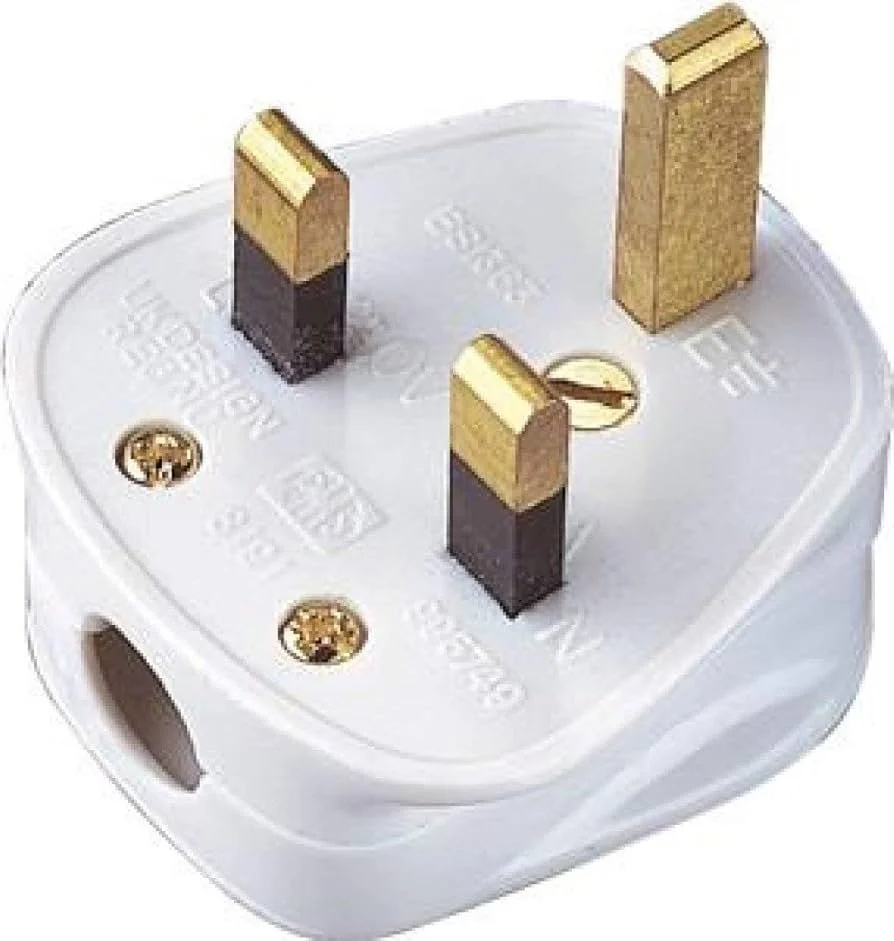
Singapore 3-Pin Plug featuring a full-sized earth contact
You can easily identify the quality of a power track by looking at the back of the adaptor (the side that enters the track).
Think of a standard Singapore 3-pin plug. You have three distinct pins: Live, Neutral, and the largest, longest pin at the top—the Earth. This Earth pin is oversized for a reason: it must be the first to connect and the last to disconnect, providing a massive "drainpipe" for stray electricity.
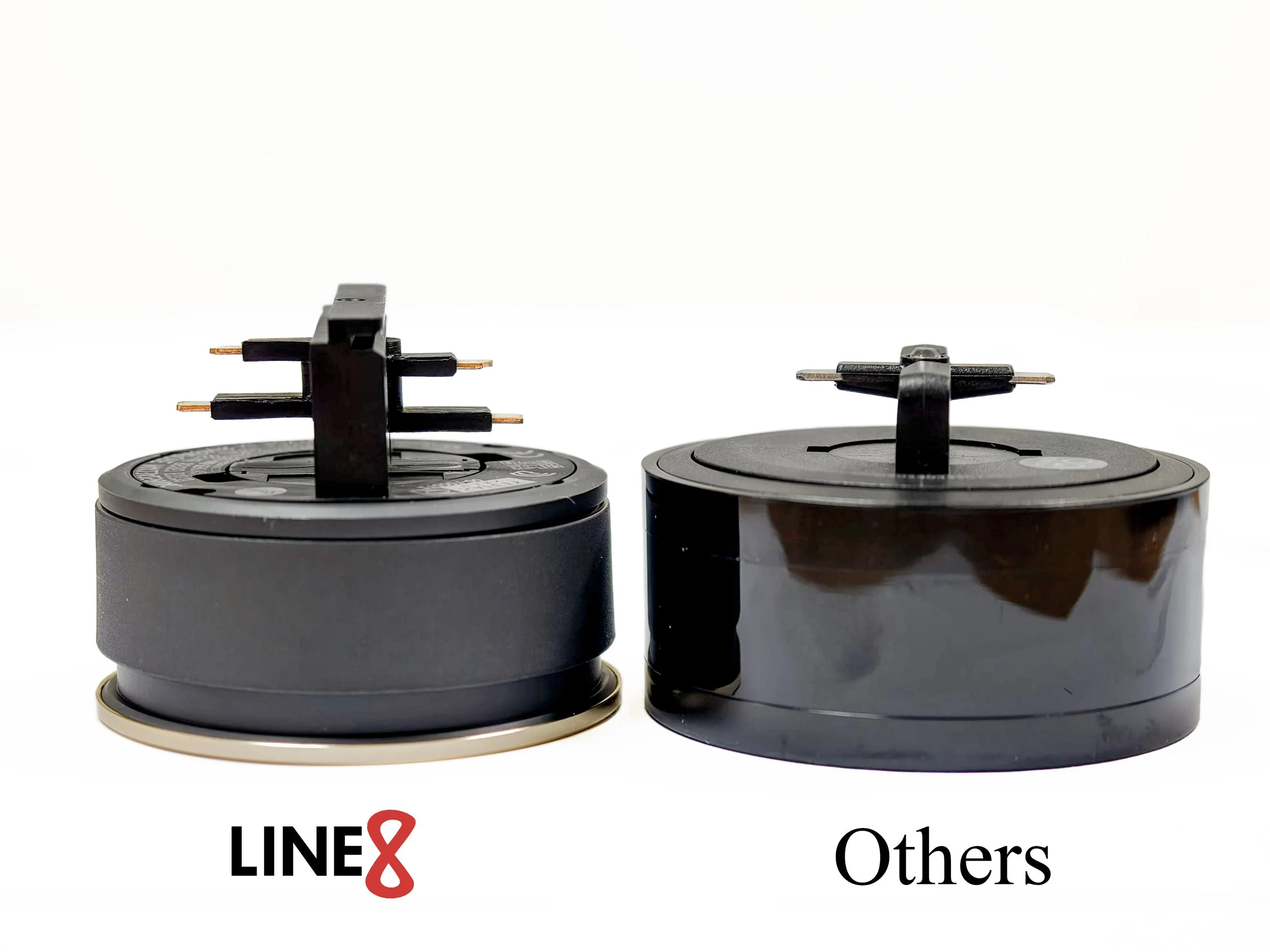
The Competitor Flaw: Most "slim" competitor adaptors feature only 2 connectivity pins on the key side. They omit the third physical pin to keep the track profile thin.
The "Trick" Strip: Some brands use a flimsy, thin metal strip to make contact with the track housing. This is often just enough to "trick" a basic socket tester into showing a green light, but it lacks the surface area to safely discharge a real electrical surge.
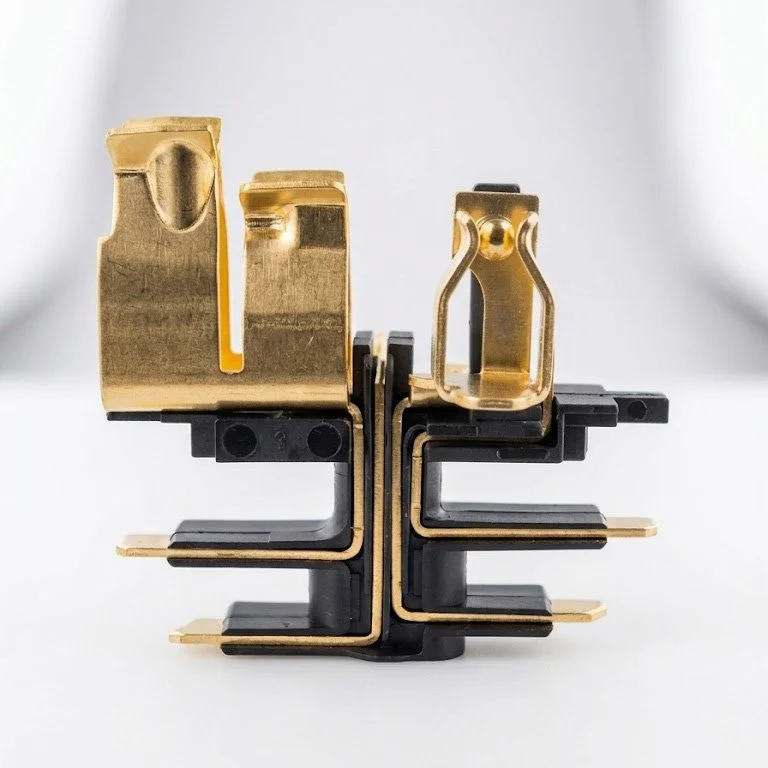
The Line8 Standard: Every Line8 adaptor features 4 robust pins. This ensures a high-capacity, physical connection for Live, Neutral, DC, and a full sized Earth system that exceeds the rated power of the track current capacity.
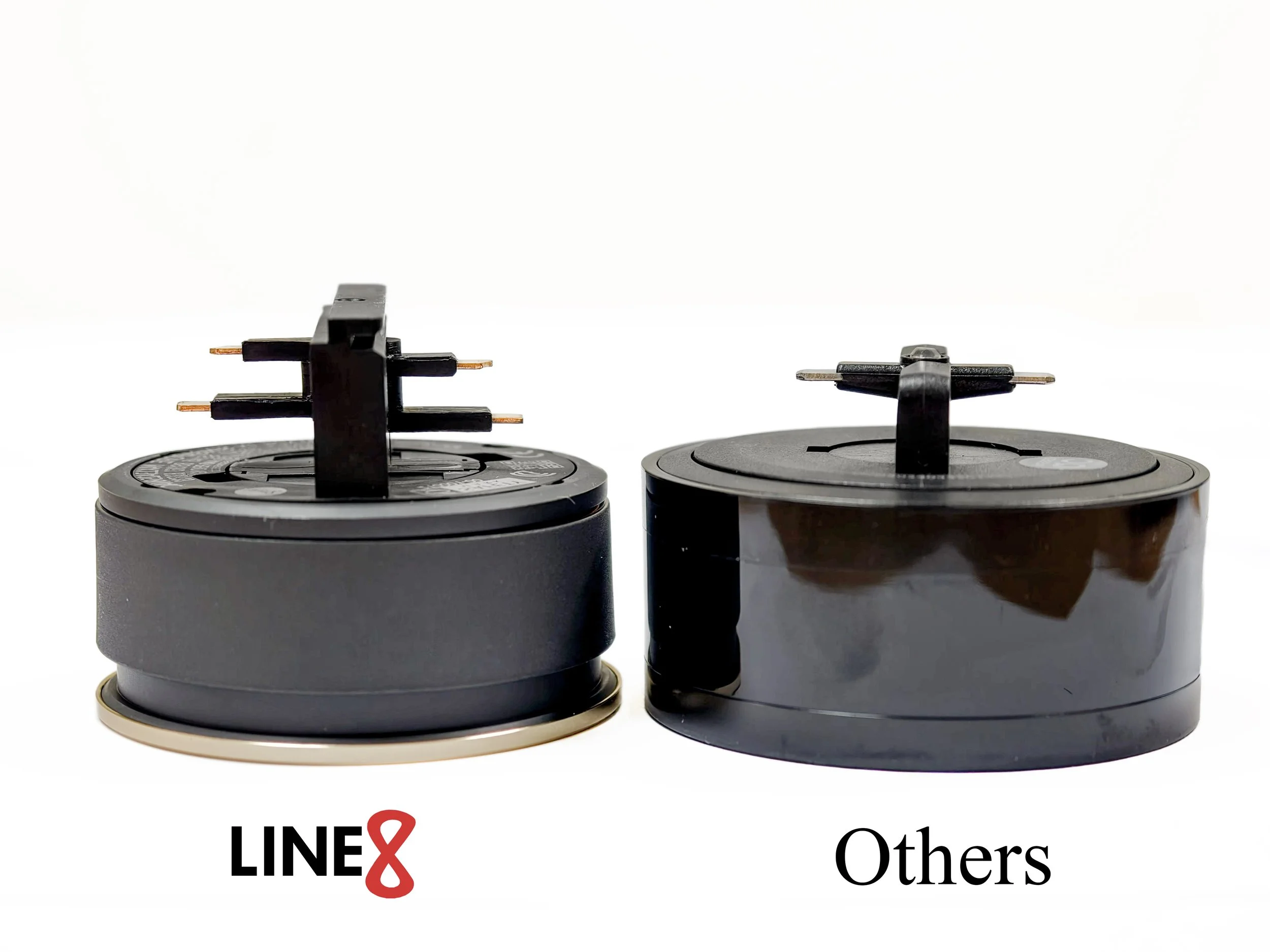
Line8’s System utilises a full-sized earth while other brand’s 2-pin design omits a full-sized earth contact to save cost and allowing the track to be slimmer.
Line8’s "Neural Network" of Grounding
While others try to omit or minimize the earth connection, Line8 treats it as a structural priority. We don't just use a single wire; we use an Active Grounded Shield architecture.
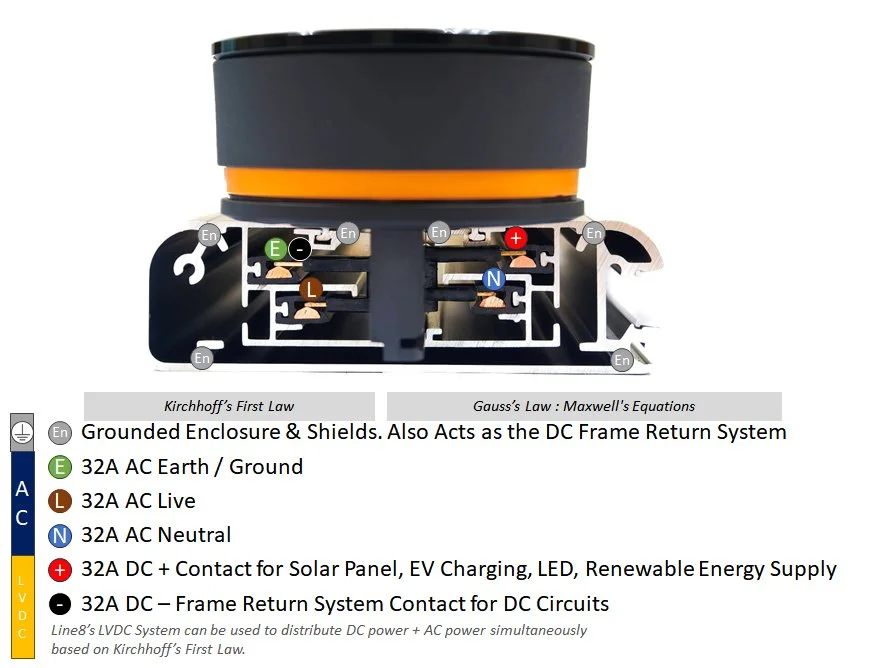
The Line8 system is designed from the ground up for the future. Featuring “tomorrow’s” green energy grid LVDC systems built into every track. Ready to be fired up anytime by including the DC + Conductor Bus-rail.
1. The Quad-Pin Connection
By using four pins instead of two, Line8 ensures that we have a dedicated Earth contact. Supplemented by the grounded enclosure & shields which ensures greater cross sectional area than the Live and Neutral lines. This allows for a massive current-carrying capacity, ensuring that if a fault occurs, the electricity is neutralized instantly.
2. The Aluminium Enclosure "Safety Net"
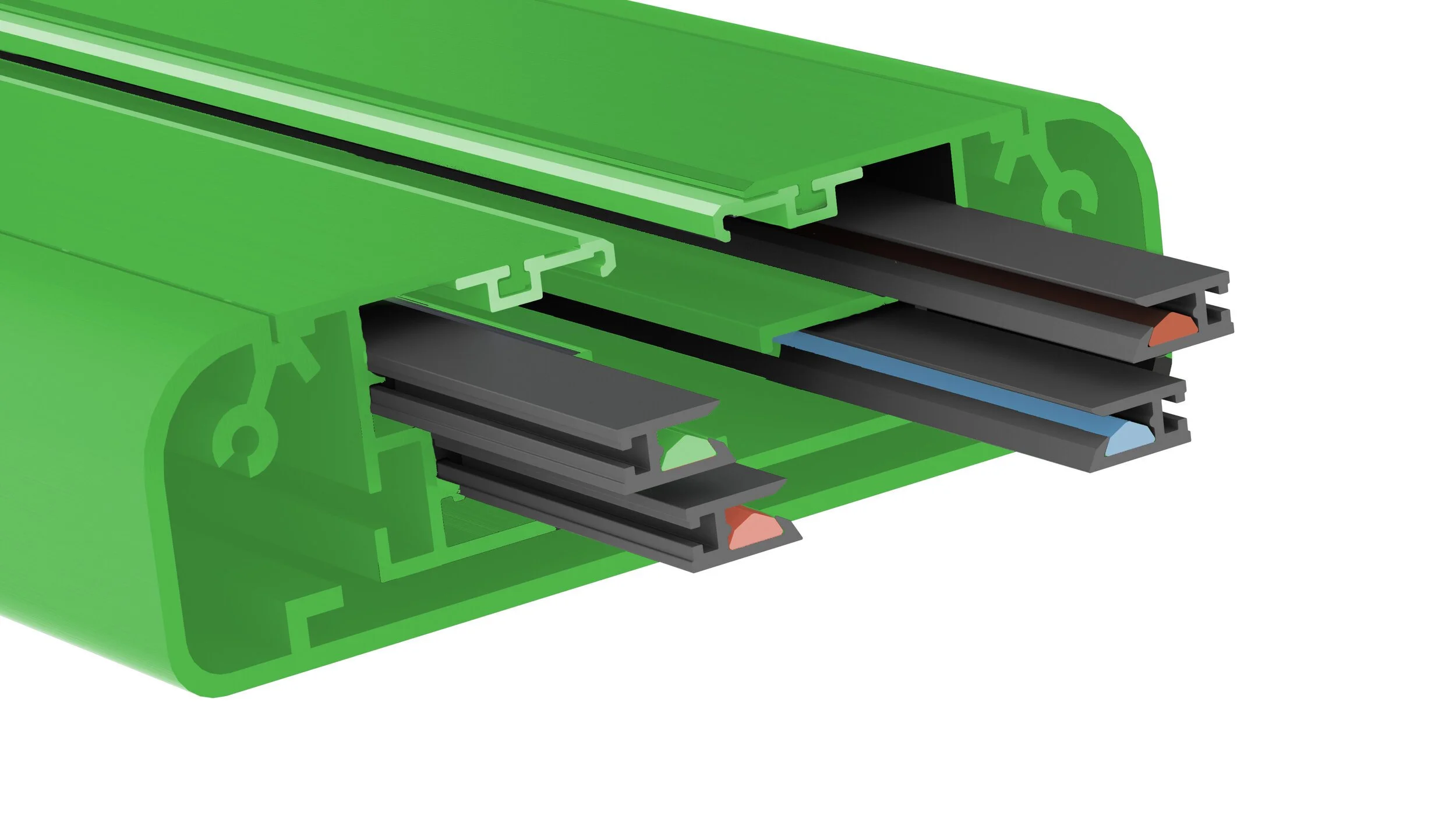
Line8’s aluminium enclosure and core is integrated into the earthing circuit
Unlike plastic tracks or aluminium shell tracks, the entire Line8 aluminium enclosure & core is integrated into the earthing circuit.
The opening of the track is flanked by our Patented Active Grounded Shield.
This creates a "neural network" of ground points surrounding the internal conductors.
If a stray wire or a foreign object (like a fork or a damp cloth or even water) touches the track, the grounded shield is positioned to "arrest" the leakage before it can reach the user.
Line8, a locally founded R&D and Engineering Company develops and manufactures the Line8 Power Track System. Our products have proven to be innovative and aesthetically pleasing in many of our customer's homes locally and overseas.
Learn more at : www.line8.com.sg
Want to see how Line8 compares to other brands on grounding, certification, and safety engineering? Read our complete 2025 Power Track Buyer’s Guide.
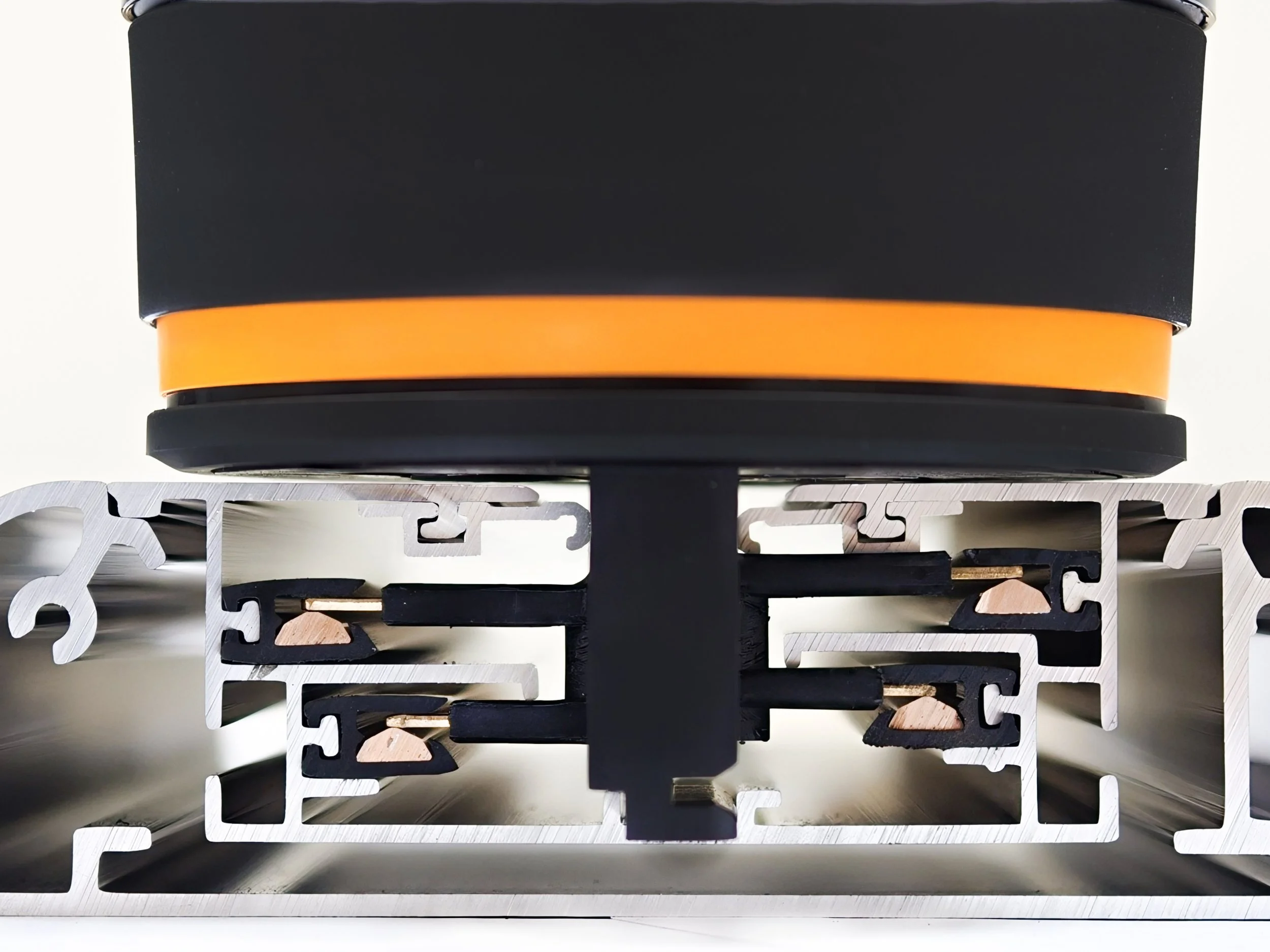
The Silent Guard: Why Line8’s Full-Sized Earth Connection Sets a New Standard for Power Tracks
Most power tracks look great on the outside, but have you seen the engineering beneath the surface?
While some brands cut costs with thin, high-resistance earth conductors, Line8 uses a Full-Sized Earth Connection. Why does that matter? Read on to find out more.
When choosing a power track system, most users focus on the sleek aesthetics or the convenience of "plugging in anywhere." However, beneath the surface of these modern electrical solutions lies a critical engineering detail that many brands overlook: the earth connection.
While competitors often cut costs by using thinner, lower-grade earth conductors—or omitting them entirely—Line8 has engineered its system with a full-sized 32A earth connection. Here is an informative look at why this "silent" feature is the most important factor in your home's electrical safety.
1. The Engineering Gap: Full-Sized vs. Underpowered Earth
In a standard electrical circuit, the earth (ground) wire is your primary defense against electrocution. Its job is to provide a low-resistance path for "fault current" to escape safely to the ground if an appliance fails.
The Hidden Shortcut: Many power track systems use thin, higher-resistance strips for the earth connection to save on material costs (copper). In some cases, the earth conductor is omitted entirely, relying on the track's outer casing—which may not provide a continuous or reliable path.
The Line8 Advantage: Line8 uses a full-sized earth conductor that matches the current-carrying capacity of the Live and Neutral rails. This ensures that in the event of a massive surge or "earth leakage," the track can handle the full discharge without overheating or failing, triggering your home’s circuit breaker instantly as intended.
Why it matters: A lower-grade earth conductor can act like a "bottleneck" during a short circuit. If it cannot carry the fault current, the electricity may seek the next easiest path—which could be through the person touching the appliance.
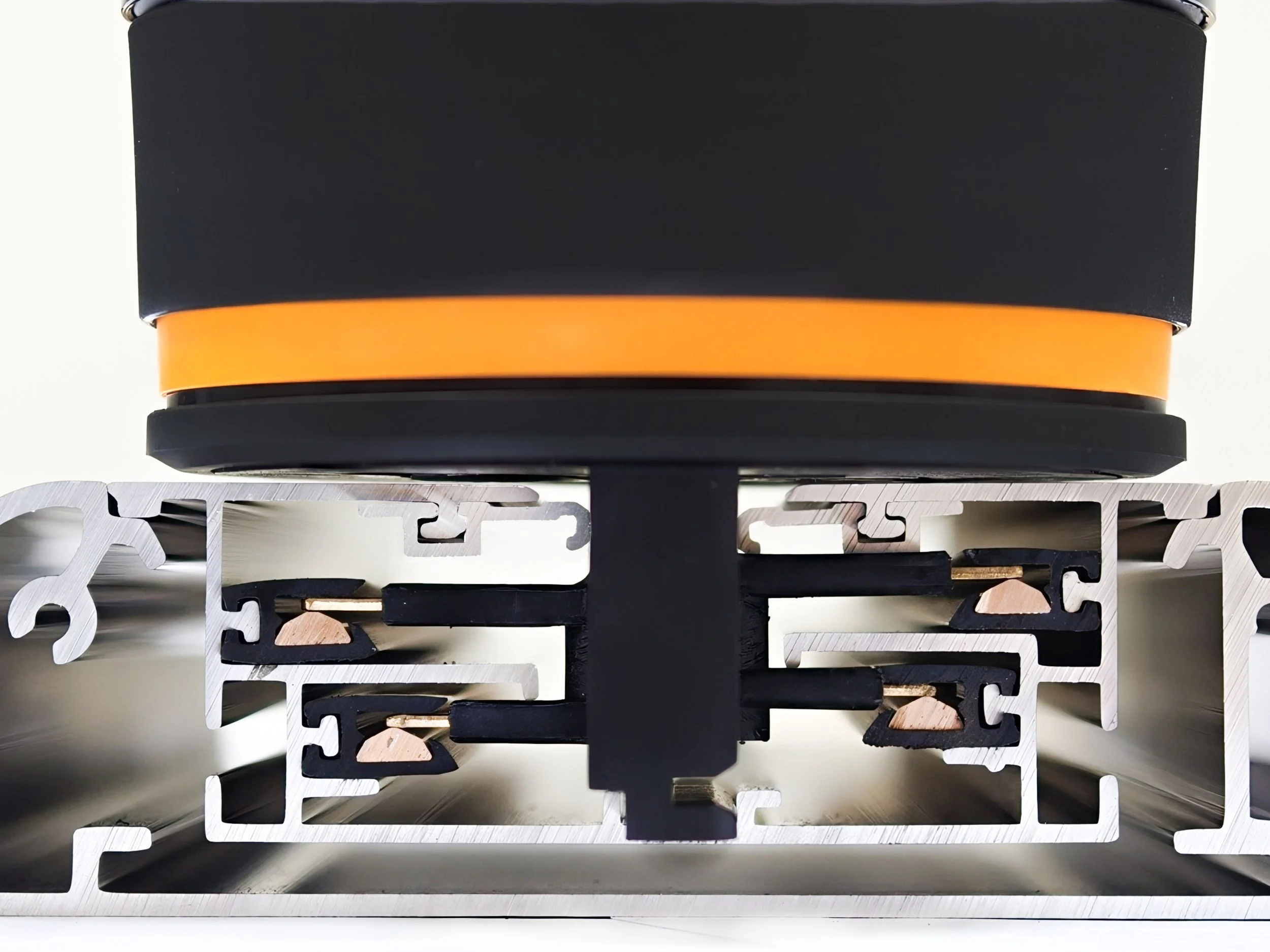
Line8’s Power Track Core - Featuring a patented 4 terminal (Earth, Live, Neutral, DC) 32A 99.99% ETP Copper Conductors
2. Safety by Design: Beyond the Specification Sheet
Standard specifications often highlight current carrying capacity (e.g., 32A , 8000W), but they rarely detail the earth discharge capability.
| Feature | Line8 Power Tracks | Common Competitor Tracks |
|---|---|---|
| Earth Conductor | Full-Sized & Dedicated: Equal to Live/Neutral capacity. | Often reduced gauge or high-resistance strips. |
| Grounded Shielding | Active Grounded Shield: Dual strips protect internal contacts. | Often absent; exposed conductors pose a risk to children. |
| Engagement | Unidirectional: Prevents Live/Neutral reversal. | Some allow bidirectional use, risking incorrect wiring. |
| Materials | High-Performance Thermoplastics: Glass-fiber PBT. | Standard ABS or PVC (lower heat/fire resistance). |
3. Solving Durability and Safety Problems
Line8 doesn't just meet standards; it solves the inherent weaknesses of the "power track" concept through three key innovations:
A. Triple-Redundancy Safety
Line8 employs a patented "Lock-and-Key" system. The conductors are securely enclosed and remain in an "always off" state. Power only flows when a Line8 adaptor is fully inserted and rotated. This prevents accidental activation by "itchy hands" or foreign objects.
B. Space-Age Materials for Lifespan
While many brands use common plastics like ABS, Line8 utilizes Glass-Fiber Reinforced PBT and Xyron conductor carriers. These materials are:
V0-Fire Resistant: They will not support combustion.
Electrically Impermeable: Higher insulation strength than standard plastics.
Structurally Rigid: They do not warp under the heat of high electrical loads, ensuring the electrical connection remains tight for decades.
C. Eliminating Electrical Arcing
One of the biggest causes of wear in power tracks is "arcing"—the sparks that occur when you plug in an adaptor when under load. Line8’s adaptors feature a silver nickel mechanical switch that only completes the circuit after the mechanical connection is secure.
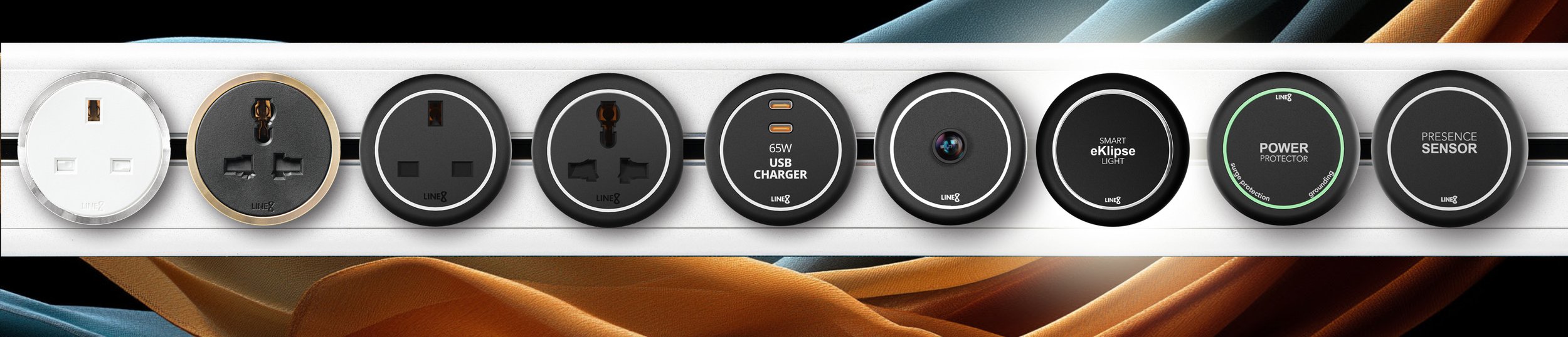
Line8 Power Track in Pearl White Finish with our range of power, lighting, IoT, SMART, Surge Protection, mmWave Sensing, IP Camera adpaptors.
4. Line8 Tracks: An Investment in Protection
A power track is a permanent installation in your home, often carrying the electrical load of an entire kitchen or entertainment center. While a competitor might look similar on the outside, the lack of a robust, full-sized earth connection is a hidden compromise in safety.
By choosing Line8, you aren't just buying a "fancy power strip"—you are installing a miniaturized industrial bus-bar system designed with the same safety margins found in high power electrical distribution design.
Line8, a locally founded R&D and Engineering Company develops and manufactures the Line8 Power Track System. Our products have proven to be innovative and aesthetically pleasing in many of our customer's homes locally and overseas.
Learn more at : www.line8.com.sg
Singapore Power Track Buyer's Guide 2025
The top three power track brands in Singapore are Line8, Eubiq, and Nexen. Line8 leads on safety engineering (full-conductor earthing, patented grounded aperture, no rubber shutter) and is the only brand with a lifetime warranty and 11 permanent colour finishes. Eubiq offers a straightforward option with lower adaptor pricing at $40, though its sealed, non-modular construction means any structural fault — not just the rubber shutter — requires a full track replacement. Nexen is an OEM rebrand with the highest official adaptor price at $59.90 each, and to hit its slim 20mm profile it uses a thinner, undersized earthing design compared to Line8's near-identical 25mm-profile Model SL. Some Chinese third-party accessories have been found to fit Nexen tracks, but this isn't evidence of a wider OEM accessory ecosystem — it's one specific factory's design, with no guarantee that fit persists over time. This guide covers engineering, certifications, pricing, maintenance costs, and total cost of ownership across all three brands.
Singapore Power Track Buyer's Guide 2025
- 1. Power Track vs Extension Cord
- 2. SAFETY Mark & Certifications — What to Verify
- 3. Electrical Capacity & Load Limits
- 4. Grounding Architecture — The Safety Spec Brands Rarely Publish
- 5. Safety Shutter Design — Rubber Flaps vs Grounded Aperture
- 6. OEM Rebranding — How to Tell a Genuine Manufacturer from a Rebrand
- 7. Adaptor & Accessory Ecosystems — What a Full Range Looks Like
- 8. Material Quality — PBT vs PC-ABS and the Yellowing Problem
- 9. Rubber Maintenance — The Hidden Long-Term Cost
- 10. Total Cost of Ownership — A 5-Year Model
- 11. Colour Continuity — A Risk Most Buyers Overlook
- 12. Use Cases by Room
- 13. Where to Buy Line8 in Singapore
- 14. The Complete Buyer's Checklist
- 15. About Line8
1. Power Track vs Extension Cord — Which Do You Actually Need?
Most buyers start here. Both solve the same problem — more outlets — but they are fundamentally different products with different safety profiles, costs, and installation requirements.
| Power Track System | Extension Cord | |
|---|---|---|
| How it works | Adaptors plug anywhere along a live conductor rail — repositionable at any time | Fixed sockets at set points along a cable |
| Installation | Wall or surface mounted — semi-permanent, clean finish | Portable, no installation required |
| Flexibility | Full flexibility — move sockets and add adaptor types any time | Fixed socket positions, no reconfiguration |
| Aesthetics | Clean, flush-mounted look with no trailing cable | Visible cable running along floor or wall |
| Total cost | Higher upfront — track, adaptors, optional installation | Low — typically SGD $10–50 |
| Safety | Track-certified systems meet SS 145 and IEC standards for fixed conductor use | Must be SS-certified; extension cords are not designed for permanent load |
| Best for | Renovations, kitchens, home offices, permanent setups | Temporary, portable, occasional use |
2. SAFETY Mark & Certifications — What to Verify Before You Buy
In Singapore, electrical accessories must carry the SAFETY Mark issued by the Consumer Product Safety Office (CPSO) under the Consumer Protection (Safety Requirements) Regulations. It is important to understand which part of a power track system this applies to — and which part it does not. The track rail itself is not subject to Singapore SAFETY Mark requirements. The track is a fixed busway system and falls under a different certification framework — specifically the international standard IEC 61534. The SAFETY Mark requirement applies to the adaptors and accessories that are plugged into the track, as these are classified as socket-outlets and plugs under controlled goods regulations.
| Certification | What it means for power tracks |
|---|---|
| SAFETY Mark (CPSO) Adaptors only | Mandatory for legal sale of power track accessories (adaptors) in Singapore. This is a controlled-goods requirement for socket-outlets and plugs — it applies to each individual adaptor model, not to the track rail itself. Verify any adaptor at go.gov.sg/safetymark. |
| IEC 61534 Track rail | The correct certification standard for the track busway itself. A separate requirement from SAFETY Mark — applies to the track rail as a fixed conductor system. Line8 is IEC 61534 certified. Not all brands in the Singapore market disclose this certification for their tracks. |
| SS 145 / BS 5733 / BS 1363 Adaptors | Singapore and British Standards for plugs and socket-outlets — the technical basis for SAFETY Mark testing of individual adaptor models. Each adaptor must be independently tested and registered. |
3. Electrical Capacity — Amps, Load Limits & High-Draw Appliances
Most power track systems sold in Singapore claim a 32A / 8,000W track rating. This figure is not a differentiator — it is a minimum marketing benchmark. What matters for actual safety is how the system performs under sustained real-world load, which is determined by the conductor design, not the marketing headline.
3.1 How to Read Load Ratings in Practice
| Load level | Approx. wattage (230V SG) | Typical devices | Guidance |
|---|---|---|---|
| Low | Up to 1,500W | Phone chargers, laptop, router, desk lamp | Well within any 32A track |
| Medium | 1,500W – 3,000W | Rice cooker (500W), toaster (800W), electric fan, monitor | Fine on any properly rated track |
| High | 3,000W – 5,000W | Kettle (2,400W), air fryer (1,500W), microwave (1,200W) | Use one high-draw device at a time; verify your upstream circuit breaker |
| Kitchen combined | 5,000W+ | Multiple high-draw appliances simultaneously | Exceeds 80% rule — circuit trip risk regardless of track rating |
3.2 Conductor Size and Material — Two Specs That Both Matter
Most buyers and most brands focus only on the conductor cross-sectional area (mm²). But there is a second specification that is equally important and almost never disclosed: what the conductor is actually made of. Together, size and material determine the true current-carrying capacity of any power track — and a nameplate "32A" rating means very different things depending on both.
Conductor Material — The Hidden Quality Differentiator
Power track conductors can be made from pure copper, brass (a copper-zinc alloy), or aluminium. The material choice has a direct and significant impact on how much current the conductor can carry for a given cross-section before generating dangerous heat — measured by electrical conductivity (IACS %).
| Conductor material | Conductivity (IACS %) | Current capacity relative to copper | Common use in power tracks |
|---|---|---|---|
| ETP Copper — Line8 | ~100% | Full rated capacity. ETP (Electrolytic Tough Pitch) copper is the highest-purity commercially available conductor material at ~99.9% copper content. It is the benchmark all other materials are measured against. | Line8 — all three conductors (L, N, E) |
| Aluminium | ~61% | Only ~61% of copper's current capacity for the same cross-section. Requires a significantly larger cross-section to carry the same load. Also susceptible to oxidation at connection points, increasing resistance over time. | Used in some OEM systems as a cost-cutting measure |
| Brass (copper-zinc alloy) | ~28% | Only ~28% of copper's current capacity for the same cross-section. A brass conductor must be roughly 3.5× larger than a copper conductor to carry the same current with equivalent heat rise. Brass is substantially cheaper to manufacture than pure copper — which is why it appears in OEM products. | Common in Chinese OEM power tracks and rebranded systems |
Conductor Size — Cross-Sectional Area (mm²)
With conductor material in context, cross-sectional area now becomes meaningful. The two specifications work together: a larger cross-section of a lower-conductivity material may still underperform a smaller cross-section of pure ETP copper.
| Conductor size | What it means (pure copper basis) | Recommended use |
|---|---|---|
| 1.0 mm² | Low-capacity — adequate for chargers, lamps and AV equipment only | Not recommended for kitchen or high-draw installation |
| 1.5 mm² | Standard residential wiring gauge — suitable for typical home loads | Appropriate for most home and office use |
| 2.5 mm² | Higher-capacity — equivalent to 20A fixed-wiring standard | Recommended for kitchen countertops and commercial use |
| 6 mm² ETP Copper — Line8 | 6mm² pure ETP copper for all three conductors (L, N, E). Equivalent to 32A submain wiring. The combination of maximum conductor size and maximum material conductivity gives Line8 the highest genuine current capacity of any power track system available in Singapore. | No equivalent available in the market. Suitable for the most demanding kitchen, commercial, and high-load installations. |
When evaluating any power track: ask for both the conductor cross-section (mm²) and the conductor material. A genuine manufacturer can answer both immediately. If a supplier only refers you back to the rated wattage, that is a clear signal that the underlying conductor specification does not reflect well on the product.
4. Grounding Architecture — The Safety Specification Brands Rarely Publish
The earth (ground) conductor is your last line of defence in a fault scenario. When a live conductor makes accidental contact with a metal part, the earth path provides a low-resistance route for fault current to flow safely to ground — tripping a breaker before harm occurs.
In power track systems, there are two fundamentally different approaches to how this earth connection is implemented. The difference is significant and is almost never mentioned in product marketing.
| Feature | Full-conductor earthing (Line8 approach) | Sheet-metal contact earthing (common market approach) |
|---|---|---|
| Earth conductor type | Dedicated full-length conductor — 6mm² cross-section, identical in specification to the Live and Neutral conductors | A sheet or strip of metal at the base of the track channel — the adaptor presses a contact point against it |
| Adaptor earth connection | 3-pin engagement: Live, Neutral and Earth each connect to a dedicated conductor | 2-pin main connection; earth is made via a round contact point touching the metal sheet |
| Contact reliability | Consistent — conductor engagement is the same every time, for every adaptor | Point contact — quality depends on contact surface condition; subject to oxidation, dust and wear |
| Fault current path quality | Low-resistance, predictable, verifiable | Higher and variable resistance possible; path quality depends on accumulated wear and contamination |
| Long-term reliability | High — the conductor cannot degrade differently from the live and neutral paths | Moderate — contact point earthing is sensitive to the same degradation factors that affect rubber shutters |
| Engineering philosophy | Electrical engineering approach: earth is treated as a primary safety element equal to L and N | Mechanical approach: the physical assembly is assumed to provide sufficient grounding through metal contact |
5. Safety Shutter Design — Rubber Flaps vs Grounded Aperture
Every power track must prevent accidental contact with live conductors when no adaptor is inserted. This is a child safety, touch protection, and ingress protection requirement. There are two distinct engineering philosophies in the market for achieving this.
5.1 Rubber Flap / Mechanical Shutter Systems
The most common approach in the market uses flexible rubber or plastic flaps that physically block the track opening. An adaptor pushes past or displaces the rubber barrier to make electrical contact.
| Aspect | Detail |
|---|---|
| How it works | Rubber or polymer flaps physically obstruct the conductor channel; adaptor displacement pushes them aside |
| Advantages | Familiar concept — similar to safety shutters in wall sockets; physically conceals conductors; simple construction |
| Disadvantages | Rubber and plastic components harden, crack, and deform over time — accelerated by Singapore's heat and humidity |
| Maintenance implication | Degraded rubber shutters reduce protection integrity. Most manufacturers that use this design offer a "refurbishment service" to replace internal rubber components — a recurring cost with on-site labour charges |
| Climate concern | Tropical heat (30–35°C ambient, higher in kitchens) significantly shortens the service life of rubber polymer components compared to temperate climates |
5.2 Grounded Aperture System (Line8 Patented Design)
Line8 uses a different engineering approach: a patented grounded aperture system that integrates grounded conductive shielding as part of the safety architecture itself, rather than relying on a flexible insulating barrier.
| Aspect | Detail |
|---|---|
| How it works | Grounded conductive shielding at the aperture means the opening itself is part of the grounding architecture — not just a hole with a rubber cover |
| Triple redundancy | Line8's system combines the grounded aperture with a push-pull switch mechanism and a lock-and-key engagement — three independent safety layers |
| No rubber components in safety path | The safety function does not depend on any rubber, polymer or soft material. There is nothing to harden, crack or deform. |
| Maintenance implication | No maintenance required. The safety architecture is based on engineering geometry and conductor design — not material integrity. |
| Climate concern | None — grounded aperture performance is not temperature or humidity dependent |
6. OEM Rebranding — How to Tell a Genuine Manufacturer from a Rebrand
A significant portion of the power track systems sold in Singapore are OEM rebrands — products manufactured by Chinese factories and sold under a different brand name by a local or regional distributor. Understanding this distinction is important because it affects product quality consistency, technical support depth, spare parts availability, and long-term supply security.
6.1 What OEM Rebranding Means
| Factor | Genuine manufacturer | OEM rebrand / distributor brand |
|---|---|---|
| Design control | Holds proprietary specifications and engineering IP | Relies on factory's standard product — limited ability to specify engineering details |
| Technical knowledge | Can answer detailed engineering questions about any aspect of the product | Technical knowledge limited to what the factory shares; factory relationship may restrict disclosure |
| Spare parts | Manufactures spare parts; can supply individual components | Cannot manufacture parts independently; often must return to factory for any replacement |
| Quality consistency | Controls specification tier and quality standards directly | Quality may vary by batch depending on the specification ordered from the factory |
| Long-term supply | Brand controls its own production continuity | If the factory relationship ends, supply of compatible parts and accessories may be disrupted |
| Third-party accessory risk | Unique form factor means no uncontrolled third-party accessories in market | Identical OEM products may be sold on Chinese platforms, meaning uncertified accessories will be physically compatible |
6.2 How to Identify an OEM Rebrand
- Search Chinese platforms (Taobao, AliExpress) for images of the track and adaptors. If you find visually and dimensionally identical products listed by Chinese manufacturers, you are likely looking at an OEM rebrand.
- Ask the brand who manufactures their product. A genuine manufacturer can answer this clearly. A distributor brand often gives vague answers.
- Ask for the conductor cross-section and material in writing. A genuine manufacturer answers both immediately: cross-section in mm² and conductor material by grade. An OEM rebrand distributor often cannot answer the material question at all — because the answer (brass or aluminium) would be commercially inconvenient.
- Test adaptor compatibility. If accessories from other brands — particularly Chinese-market accessories — fit and function in the track, this is strong evidence of a shared OEM source.
- Check spare parts availability. Genuine manufacturers can supply individual components. OEM rebrand distributors typically require full system replacement for any fault.
Line8 is a genuine Singapore manufacturer. Line8's tracks and adaptors are designed, developed and manufactured in Singapore to proprietary specifications. The form factor is unique — Line8 is not found on any Chinese platform as a generic listing. All adaptors are designed and certified by Line8 and are 100% backward compatible across all track generations.
7. Adaptor & Accessory Ecosystems — What a Full Range Looks Like
The track is just the rail. The long-term value of a power track installation depends heavily on the ecosystem of certified adaptors and accessories available for it. When evaluating any power track system, consider not just the adaptor types available today, but what will be available in 3–5 years when you want to add or change something.
7.1 What a Comprehensive Ecosystem Should Include
| Adaptor / accessory type | Why it matters | Line8 offering |
|---|---|---|
| UK 3-pin socket | The baseline for any Singapore installation | Standard UK adaptor — SAFETY Mark certified |
| GaN USB-C fast charging (65W+) | Critical for modern devices. Not all USB-C adaptors deliver meaningful fast charging — check wattage, not just socket type. A USB-C adaptor outputting only 36W max is substantially limited compared to a 65W GaN unit. | CHG-65 GaN — 65W output, PD / QC / AFC / Apple protocols |
| Smart plug / IoT integration | Essential for home automation. Should carry SAFETY Mark certification, not just physical compatibility. | Zen-UKS WiFi — full Tuya smart home integration, certified |
| Surge protection | Protects connected devices from voltage spikes — more important in Singapore given our historical lightning frequency | Protect adaptor — 13,500A surge rated; also available as built-in track module |
| Ambient / night light | Useful in living rooms and bedrooms; reduces need for separate lamps | eKlipse — CSP LED, zero-flicker, warm/neutral options |
| Smart IoT camera | Unique to premium track ecosystems — powers a camera directly from the track body without additional cabling | sKope — QHD resolution, powered from track |
| AV / data faceplates | HDMI, USB data, and AV connections flush-mounted into the track body — eliminates cable clutter in entertainment setups | Flush-mount AV faceplate system |
| Backward compatibility | Critical for long-term value. If the brand changes its connector format, all existing adaptors become obsolete. | 100% backward compatible — all Line8 adaptors work on all Line8 track generations |
8. Material Quality — PBT vs PC-ABS and the Yellowing Problem
Power track adaptors are made from engineering-grade polymers. The choice of material has a direct impact on how the product ages in Singapore's conditions — and it is a specification almost no brand publishes in their marketing materials.
| Property | PBT (Polybutylene Terephthalate) — Line8 | PC-ABS (Polycarbonate-ABS) — common market material |
|---|---|---|
| UV yellowing | Does not yellow — PBT is inherently UV-stable | Yellows with UV exposure — a visible sign of material degradation |
| Heat resistance | Rated to higher temperatures — suitable for sustained use near kitchen heat | Lower heat resistance threshold — visible deformation possible near sustained heat sources |
| Fire rating | PBT rated V0 under UL94 — self-extinguishing | PC-ABS fire rating varies; not universally V0-rated |
| Long-term brittleness | Retains mechanical integrity under UV and thermal cycling | Becomes brittle with UV exposure even when discolouration is masked by dark pigmentation |
| Appearance over time | Maintains original colour and finish | White and light-coloured units yellow visibly. Black units may not yellow visually, but the underlying polymer still degrades and becomes brittle. |
9. Rubber Maintenance — The Hidden Long-Term Cost
If a power track system uses rubber flap or mechanical shutter components to protect the conductor channel, those rubber parts will degrade over time. In Singapore's tropical climate — sustained heat, humidity, and UV exposure — rubber polymer degradation is faster than in temperate climates.
This creates a recurring maintenance cost that is rarely disclosed in product comparisons or pricing pages but is a known, acknowledged aspect of rubber-shutter track systems. One manufacturer formally offers a "Refurbishment Service" — a service that requires track disassembly and internal rubber component replacement.
| Maintenance factor | Rubber-shutter track systems | Line8 (grounded aperture — no rubber) |
|---|---|---|
| Rubber component in safety path? | Yes — rubber flap or shutter required for touch protection | No — safety function is engineering/grounding based, not rubber-dependent |
| Typical replacement frequency in SG | Every 2–4 years depending on installation environment | Not applicable — no rubber components to replace |
| Rubber material cost (per metre) | Estimated $12–25 per metre of track | $0 |
| On-site service / labour cost | Typically $80–120 per service visit (transport + labour) | $0 |
| Estimated 5-year maintenance cost (1m track) | ~$140–265 over 5 years (1–2 service visits) | $0 — covered under lifetime warranty |
| Disruption | Track must be disassembled; installation disturbed | None required |
10. Total Cost of Ownership — A 5-Year Model
Once rubber maintenance costs and adaptor pricing are factored in, the total 5-year cost picture changes significantly compared to the upfront sticker price alone. The table below compares Line8 against two representative market categories based on verified and publicly available pricing data.
10.1 Verified Line8 Pricing
| Item | Price (SGD) | Notes |
|---|---|---|
| Track — Black Hairline finish (per metre) | $279/m | Custom-cut to 1mm precision. Build your track at line8.com.sg/configurator |
| Track — Premium colour finishes (per metre) | $333/m | 11 hand-applied permanent finishes; same lead time as Black Hairline |
| Adaptor — Premium UK socket | $45/pc | SAFETY Mark certified; 100% backward compatible |
| Adaptor — Zen series (WiFi, GaN, etc.) | From $32/pc | Smart and specialist adaptor range; see shop.line8.com.sg for full pricing |
| Starter package — 1200mm + adaptors + 3m cord | From $438 | Black Hairline; complete kit ready to install |
| Warranty | Lifetime — all tracks and adaptors | Covers manufacturing defects and component failure for life of product |
10.2 5-Year Cost Comparison: Line8 vs OEM Rebranded Systems
| Cost component | Line8 Genuine manufacturer · Lifetime warranty · No rubber components |
OEM rebranded systems Standard warranty · Rubber shutters · est. market pricing |
|---|---|---|
| 1m track (entry colour) | $279 | ~$240–294 (est. market range) |
| 4× official adaptors | ~$128–180 ($32–45/pc) | ~$160–240 (est. market range) |
| Rubber maintenance (5yr) | $0 — no rubber components in the system | ~$140–265 (rubber parts + 1–2 on-site service visits) |
| Adaptor replacements (5yr) | $0 — covered under lifetime warranty | ~$40–120 (no lifetime warranty; replacements at full adaptor price) |
| Spare parts if needed | Available individually on website — order by part number | Full set replacement required — no individual spare parts |
| 5-YEAR TOTAL (estimated) | ~$407–459 | ~$615–874 |
11. Colour Continuity — A Risk Most Buyers Overlook
If you install a power track in a specific colour finish today, and need a replacement track section or additional adaptor in 3 years, will that exact colour still be available? This question is more important than it sounds, and the answer varies significantly across systems.
| Colour strategy | Risk level | Practical implication |
|---|---|---|
| Permanent, fixed colour range | Low — colours always available | If a finish is in the catalogue, it remains available. Replacement pieces will always match. |
| Seasonal colour rotation | High — colours change | A colour purchased today may be discontinued in the next product cycle. Replacing a damaged piece or extending the track may require replacing the entire installation to maintain visual consistency. |
| Colour pricing tiers (cost varies by finish) | Medium — availability varies by tier | If a colour tier is discontinued, budget alternatives may not be a like-for-like match in appearance or material finish. |
Line8 offers 11 permanent hand-applied finishes. These are stable, always-available colours priced at a fixed per-mm rate. There is no seasonal rotation and no risk of a chosen finish being discontinued. If you install Black Hairline today, Black Hairline will be available when you need it in 5 years.
12. Use Cases by Room — Matching the Right System to the Right Space
| Room / space | Key technical requirements | What to look for | Line8 recommendation |
|---|---|---|---|
| Kitchen | No rubber shutter degradation from steam/heat; robust earthing; 16A+ capable conductor; moisture-resistant materials | Full-conductor earthing; grounded aperture (no rubber); PBT casing; confirmed conductor cross-section; no rubber maintenance requirement | Line8 Model SL or Model R — grounded aperture, PBT, full-conductor earth, no rubber components |
| Home office | USB-C fast charge (65W+ GaN); smart home integration; AV data connectivity; cable management | GaN USB-C adaptor (confirm wattage — 65W minimum); certified smart plug adaptor; AV data faceplate options | Line8 with CHG-65 GaN + Zen-UKS WiFi + AV faceplate |
| Living room | Aesthetics; entertainment AV connectivity; ambient lighting; slim profile | Slim profile; premium colour matching your interior; HDMI/AV data faceplates; ambient light adaptor | Line8 — 11 finishes, eKlipse ambient, AV faceplates |
| Bedroom | USB charging; clean aesthetics; night light option | USB-C charging adaptor; night light; slim profile; colour options to match joinery | Line8 with Zen series USB-C + eKlipse night light |
| Commercial / office | Durability; multi-user; data/AV integration; certifications; camera capability | IEC 61534 certification (not just SAFETY Mark); AV data faceplates; smart camera option; full-conductor earthing for fault reliability | Line8 — IEC 61534 certified; sKope IoT camera; AV modules; lifetime warranty |
| Outdoor / semi-outdoor | IP rating; UV resistance; moisture protection | Confirm IP rating for the specific model. Not all power tracks are suitable for outdoor use — verify before installation. | Consult Line8 directly for semi-outdoor specifications |
13. Where to Buy Line8 in Singapore
| Channel | Details |
|---|---|
| Official website & configurator | line8.com.sg — pricing, configurator, and full product catalogue. Online shop: shop.line8.com.sg |
| Shopee Mall | Line8 official Shopee Mall store — verified seller with buyer protection |
| LazMall (Lazada) | Line8 official LazMall store — verified seller with buyer protection |
| Physical retail | 25+ retail outlets across Singapore including sanitary ware stores and lighting showrooms — see line8.com.sg for the full retail partner list |
| Trade / ID contractors | Line8 trade pricing available for interior designers and contractors. Contact via WhatsApp: +65 8874 5547 |
| Spare parts | Available directly on shop.line8.com.sg — individual component pricing, searchable by part number |
14. The Complete Power Track Buyer's Checklist
Before committing to any power track system, get answers to these questions. They cover the areas most buyers do not think to ask — and where the real differences between systems lie.
| Question | What a good answer looks like | Red flag |
|---|---|---|
| Is the track IEC 61534 certified? (Note: SAFETY Mark applies to adaptors, not the track rail) | Yes — IEC 61534 is the correct certification standard for a power track busway system. They can provide documentation. | Cannot confirm; no documentation available; only mentions SAFETY Mark (which applies to accessories, not the track) |
| Is the adaptor I want SAFETY Mark certified? | Yes — each adaptor model is individually certified; they can confirm the registration | Uncertainty about whether the specific adaptor is certified |
| Is your product IEC 61534 certified? | Yes — this is the busway-specific international standard, a higher bar than SS 145 alone | Only SS 145 SAFETY Mark — acceptable, but IEC 61534 confirms deeper compliance |
| What is the conductor cross-section (mm²) for L, N and E? | A specific number for each conductor. Line8: 6mm² for all three (L, N and E). For other brands, any answer of 1.5mm² or above is workable for home use; below 1.5mm² is a concern for high-draw installation. | Vague answer; refers only to the wattage rating; cannot confirm the actual cross-section |
| What material are the conductors made from? | Pure copper — ideally ETP (Electrolytic Tough Pitch) grade at ~100% IACS. This is the only material that delivers the full rated current capacity. Line8 uses ETP copper for all three conductors. | Brass, copper alloy, aluminium, or cannot confirm. Brass (~28% IACS) and aluminium (~61% IACS) carry significantly less current than pure copper at the same cross-section — making any "32A" rating on those conductors potentially misleading |
| Is the earth path a full-length conductor or sheet-metal contact? | Full-length dedicated conductor — same construction as L and N | Sheet-metal contact / point contact earthing — acceptable but lower reliability over time |
| Does the system use rubber shutter components? | "No — we use a grounded aperture design" (or similar non-rubber approach) | "Yes" — ask about maintenance schedule, cost, and frequency |
| What warranty do you offer? | Lifetime warranty covering all tracks and adaptors | 1–2 year standard warranty — calculate the replacement cost risk over 5 years |
| Are spare parts available individually? | Yes — available on our website, searchable by part number | "We replace the whole unit" — means any fault requires full repurchase |
| Will this colour be available in 3–5 years? | "Yes — all our finishes are permanent, not seasonal" | "It depends on the season" or vague answer about availability |
| What is the wattage of your USB-C adaptor? | 65W GaN or higher — suitable for laptops as well as phones | 36W or lower — limited to slower phone charging; not sufficient for laptops |
| Are your adaptors backward compatible? | "100% — all adaptors work on all our track generations" | Partial compatibility — future purchases may not work on current track |
15. About Line8
Line8 is a Singapore-designed and manufactured power track system — the only one in Singapore that is designed, developed and assembled locally, custom-cut to 1mm precision, and finished by hand in 11 permanent colour options.
| Line8 specification | Detail |
|---|---|
| Manufacturing | Designed, developed and manufactured in Singapore — not an OEM rebrand |
| Track certification | IEC 61534 — international busway standard (the correct certification framework for the track rail) |
| Adaptor certification | Singapore SAFETY Mark — all Line8 adaptors are individually SAFETY Mark certified |
| Conductor material | ETP (Electrolytic Tough Pitch) copper — ~100% IACS conductivity. The highest-purity commercially available conductor material. All three conductors (L, N, E) are pure ETP copper. |
| Earthing architecture | Full-conductor earthing — 6mm² ETP copper Earth conductor, identical in material and cross-section to the Live and Neutral conductors |
| Safety shutter / aperture | Patented grounded aperture system — no rubber components in safety path |
| Triple redundancy safety | Grounded aperture + push-pull switch + lock-and-key adaptor engagement |
| Adaptor material | PBT engineering polymer — V0 fire rated, UV stable, does not yellow |
| Track customisation | Custom-cut to 1mm precision; 11 permanent hand-applied finishes |
| Adaptor ecosystem | UK socket, CHG-65 GaN (65W), Zen-UKS WiFi (Tuya), eKlipse CSP-LED, Protect surge, sKope QHD camera, AV data faceplates |
| Backward compatibility | 100% — all Line8 adaptors work on all Line8 track generations |
| Warranty | Lifetime warranty on all tracks and adaptors |
| Spare parts | Available individually on shop.line8.com.sg |
| Retail presence | Shopee Mall + LazMall + 25+ physical retail outlets across Singapore |
| Track pricing | $279/m (Black Hairline) · $333/m (colour finishes) · Packages from $438 |
| Adaptor pricing | $32–45/pc (Zen / Premium range) — see shop.line8.com.sg |
Build Your Track → Shop All Products WhatsApp Us
- Power tracks are superior to extension cords for permanent installations — but only when properly specified and certified.
- The 32A / 8,000W headline rating is not a meaningful differentiator on its own. What matters is conductor material and cross-section together. Most OEM systems use brass conductors (~28% of copper's conductivity) or aluminium (~61%). Line8 uses 6mm² ETP copper (pure copper, ~100% IACS) for all three conductors — the only combination that makes a 32A rating genuinely reliable under sustained load.
- Grounding architecture matters: full-conductor earthing outperforms sheet-metal contact earthing in long-term reliability, particularly in humid environments.
- Rubber shutter components degrade in Singapore's climate. If your chosen system uses rubber shutters, factor in refurbishment service costs of ~$140–265 over 5 years.
- USB-C adaptor wattage varies significantly — 36W and 65W GaN are not equivalent. Confirm the spec before buying.
- PBT polymer does not yellow. PC-ABS yellows and becomes brittle over time — even black-pigmented versions.
- OEM-rebranded tracks may have compatible third-party accessories on Chinese platforms. These accessories are not certified for Singapore use.
- Lifetime warranty changes the 5-year total cost calculation dramatically. A premium track with lifetime warranty can cost less over 5 years than a lower-priced track with standard warranty and rubber maintenance costs.
- Certifications are split: SAFETY Mark applies to adaptors only — verify each adaptor at go.gov.sg/safetymark. The track itself should be IEC 61534 certified — ask for documentation.

Can Power Track Adaptors Ever be Bi-Directional?
**Enhancing Electrical Safety with the Line8 Power Track System**
The Line8 Power Track System offers a flexible and safe solution for modern power needs, allowing users to easily add and move power sockets. Unlike some competitors' bidirectional adaptors, which can reverse live and neutral connections and pose serious safety risks, Line8’s unidirectional adaptors ensure correct and secure wiring. This commitment to safety is crucial, as incorrect wiring can lead to hazards, appliance damage, and non-compliance with electrical codes. When choosing power track systems, always verify that adaptors can only be inserted in one direction to ensure safe and proper operation.
Enhancing Electrical Safety with Line8 Power Track System
The modern home and workspace demand flexibility and convenience in their power solutions. The Line8 Power Track System stands out as a revolutionary product designed to meet these needs. With the ability to add and move power sockets along the track at will, users can enjoy a level of adaptability and safety previously unimaginable.
Line8: Redefining Modular Power Adaptors
At the heart of the Line8 system are its modular adaptors, which provide a safe and user-friendly way to engage power sockets. When a socket is connected to the Line8 track, it replicates the electrical connection of having a certified electrician install an additional wall socket.

An Example of Bi-directional Engagement Marketed as a “Feature”.
Addressing Concerns About Engagement Direction
There have been some concerns regarding the engagement direction of adaptors in power track systems. Competitors' products may allow bidirectional or upside down engagement of adaptors, seemingly offering more convenience. However, this feature can compromise safety.
The Risks of Bidirectional Engagement
Engaging power adaptors bidirectionally poses significant risks due to the potential reversal of live and neutral connections. Here are the key hazards associated with this design flaw:
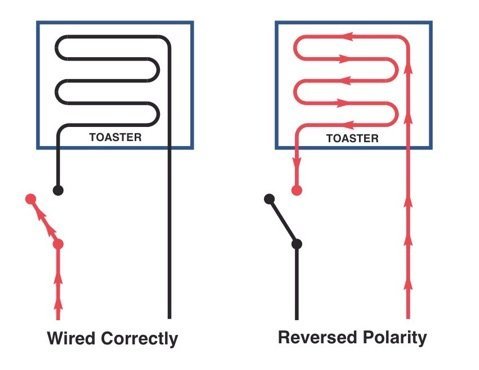
Safety Hazard: Reversing live and neutral connections can lead to internal wiring being energized even when switched off. Typically, a switch controls the live connection. When connected incorrectly, the switch would control the neutral instead, creating a dangerous situation where parts of the appliance or socket could remain live even when turned off.
Appliance Damage: Many appliances are sensitive to connection polarity. Incorrect wiring can cause appliances to malfunction or even sustain damage. Ensuring the correct connection is vital for the proper functioning and longevity of electrical devices.
Electrical Code Compliance: Electrical codes mandate correct wiring to ensure safety and proper operation. Non-compliance with these codes due to bidirectional engagement could lead to severe legal and safety repercussions.
Line8’s Commitment to Safety
The Line8 Power Track System addresses these concerns by allowing adaptor engagement in only one direction. This design choice guarantees that live and neutral connections are always correctly aligned, eliminating the risks associated with bidirectional engagement. By prioritizing user safety and appliance protection, Line8 demonstrates a thorough understanding of electrical safety principles.
Misleading Safety Certifications

It's important to note that while some products may carry safety certifications, these often only cover the socket on the adaptor, not the overall system's safety. In Singapore, for instance, the safety mark certification does not extend to ensuring the correct connection of adaptors to the power track. This oversight can give a false sense of security, highlighting the importance of a comprehensive approach to electrical safety.
Conclusion
The Line8 Power Track System sets a new standard for flexibility and safety in modular power solutions. By ensuring unidirectional engagement of adaptors, Line8 eliminates the dangers associated with reversed live and neutral connections. This commitment to safety, combined with the system’s ease of use, makes Line8 the superior choice for anyone looking to enhance their electrical setup. Prioritizing safety over misleading convenience features underscores Line8’s dedication to protecting users and their appliances.

Ensuring Your Safety
When considering power track systems, it's crucial to check that the adaptors can only be inserted in one direction. This ensures that the wiring is correct and safe. Always verify this feature before making a purchase to protect yourself and your appliances from potential hazards. By choosing systems like Line8, which prioritize correct engagement and safety, you can enjoy both convenience and peace of mind.
Line8, a locally founded R&D and Engineering Company develops and manufactures the Line8 Power Track System. Our products have proven to be innovative and aesthetically pleasing in many of our customer's homes locally and overseas.
Learn more at : www.line8.com.sg

Knowing the Difference between White Label, OEM and In-House Manufactured Products.
In today's business world, companies have several options when it comes to developing and selling products. Three terms that are commonly used are white label products, OEM products, and in-house manufactured products. While they may seem similar, there are fundamental differences between these types of products. In this post, we'll explore the differences between white label products, OEM products, and in-house manufactured products.
Knowing the Difference between White Label, OEM and In-House Manufactured Products.
In today's business world, companies have several options when it comes to developing and selling products. Three terms that are commonly used are white label products, OEM products, and in-house manufactured products. While they may seem similar, there are fundamental differences between these types of products. In this post, we'll explore the differences between white label products, OEM products, and in-house manufactured products.
What are White Label Products?

White label products are products that are produced by one company and then rebranded by another company to sell as its own. The company that sells the white label product does not produce the product itself. Instead, it purchases the product from a manufacturer and puts its own label on it.
For example, a company that wants to sell a line of skincare products may purchase pre-made products from a manufacturer and rebrand them with its own label. This way, the company can sell the skincare products as its own product without having to invest in research and development or production costs.
White label products are often used by retailers who want to offer a product that they don't manufacture themselves. It's an easy way for them to enter new markets and expand their product offerings without having to invest in research and development or manufacturing capabilities.
However there are several trade-offs:
Limited control over the product: Since the product is produced by a third-party manufacturer, the company selling the white-label product has limited control over the product's quality, design, and features.
Dependency on the manufacturer: If the manufacturer experiences production or quality issues, it can impact the company's ability to sell the product. Additionally, if the manufacturer decides to stop producing the product, the company selling the white-label product may be left without a product to sell.
What are OEM Products?

OEM products, on the other hand, are products that are designed and manufactured by one company and then sold to another company to sell under its own brand name. The original company is known as the Original Equipment Manufacturer (OEM).
For example, a company that wants to sell a line of smartphones under its own brand name can work with an OEM to design and manufacture the smartphones to its specifications. The smartphones will then be sold under the company's brand name, but they will have been designed and manufactured by the OEM.
OEM products are often superior to white-label products as the products are specifically designed and often contain proprietary technologies and the company will have full control over the performance and design of the product.
What are In-House Manufactured Products?
In-house manufactured products are products that are designed and manufactured by the same company. The company has full control over the design, production, and branding of the product.
For example, a company that specializes in the production of power track will design and manufacture its own power tracks in-house. This allows the company to have complete control over the product's design, quality, and branding.
In-house manufacturing is often used by companies that have the expertise and resources to develop and manufacture their own products. It allows them to have complete control over the product and the ability to make changes and improvements quickly.
In-house manufactured products are known to be superior as there is full direct control from design, R&D and manufacturing of the product.
Conclusion
In summary, Line8 is proud to produce all our products in-house and hence you can rest assured that we have full control over the design, technology and how the products are manufactured. This allows us to imbue every Line8 product with cutting-edge technology. Because we manufacture everything in-house yon can be sure that our service and support or even additional plugs you might need in the future will be still available in years to come.
Line8, a locally founded R&D and Engineering Company develops and manufactures the Line8 Power Track System. Our products have proven to be innovative and aesthetically pleasing in many of our customer's homes locally and overseas.
Learn more at : www.line8.com.sg

Why does Line8 Choose to Manufacture products in Singapore
SINGAPOREAN TECHNOLOGY
The main electrical distribution and safety technology of the power track system is developed right here and the patents are filed from right here in Singapore.
By manufacturing our tracks and products in Singapore, we keep the technology safe from copycats. They might reverse engineer and copy the design, but they will be missing the key safety technologies which are patent protected.

WHY DOES LINE8 CHOOSE TO MANUFACTURE PRODUCTS IN SINGAPORE
When almost every product is made in China. Why does Line8 choose to produce all their tracks and adaptors in Singapore?

SINGAPOREAN TECHNOLOGY
The main electrical distribution and safety technology of the power track system is developed right here and the patents are filed from right here in Singapore.
By manufacturing our tracks and products in Singapore, we keep the technology safe from copycats. They might reverse engineer and copy the design, but they will be missing the key safety technologies which are patent protected.
STATE OF THE ART PRODUCT DESIGN

With the expertise of Singaporean scientists and engineers from A*Star SIMTECH Singapore the product is designed from the ground up with manufacturing efficiency in mind.
With these key engineering features which are difficult to duplicate; we save as much as 90% of the labour required compared to other power track products.
This allows us to take full advantage of the high-tech, high-quality manufacturing standards of Singapore while remaining price competitive.

ACCESS TO SPACE AGE MATERIALS
Because of the extremely high labour cost in Singapore, only the best quality components and most high tech and high precision products are made here. This gives us access to space age materials like Fibre Glass Reinforced PBT.
These materials usually cost 5 to 10 times more than the common ABS plastics commonly used in products made in China. Furthermore they lack the technology to work with and produce products from these high-tech composite materials.

A SUPPORT LOCAL STATEMENT
At Line8 we believe in giving back and developing the capabilities of Singaporean Industry. To support local manufacturing and industry we have deliberately choose to manufacture all the components from the plugs to the screws we use in Singapore. We hope our Singaporean customer support local and in turn Line8 will also support local by procuring and producing our components right here in Singapore.
Line8, a locally founded R&D and Engineering Company develops and manufactures the Line8 Power Track System. Our products have proven to be innovative and aesthetically pleasing in many of our customer's homes locally and overseas.
Learn more at : www.line8.com.sg

Common Misconceptions on Electrical Safety
Our modern electrical safety system is a system that has evolved throughout the last 100 years, since the proliferation of electrical supply in homes. Each safety mechanism is human-kind learning from our mistakes. They are put in place to address an accident that caused damage or took human lives.
Fast forward to today, most of us take it for granted and do not understand how these systems work. And this same lack of understanding shrouds product designers of electrical appliances (power tracks included) today.
Lest we forget, every time we use an electrical appliance there are risks involved.

ELECTRICAL SAFETY SYSTEMS

Our modern electrical safety system is a system that has evolved throughout the last 100 years, since the proliferation of electrical supply in homes. Each safety mechanism is human-kind learning from our mistakes. They are put in place to address an accident that caused damage or took human lives.
Fast forward to today, most of us take it for granted and do not understand how these systems work. And this same lack of understanding shrouds product designers of electrical appliances (power tracks included) today.
Lest we forget, every time we use an electrical appliance there are risks involved.
THE FORGOTTEN DB

Most of us have seen something like this somewhere in our home. But I bet most of us do not know that this is what stands between us and certain death.
So, we all have this box in our homes, are we all certainly safe? Yes and no. You see, for this to work, the electrical appliances need to be fully compatible. So it depends on the design of the device; if it is compatible or not.
THE SAFETY SYSTEMS
There are 3 major safety systems we are looking at in most electrical systems

ELCB – To save the human from electrocution when an appliance fails
The ELCB (Earth Leakage Circuit Breaker) works by detecting the presence of fault currents from live to the earth (ground) wire. For this to work the appliance should have a grounded enclosure to ensure that electrical leakage to the part of the appliance that we handle is detected before it causes harm.
RCD - To save the human from electrocution when he/she accidentally gets into contact with the Live or Neutral electrical paths
The RCD (Residual Current Device) is an ingenious device that ensures that the incoming and outgoing current is balanced. Signifying that no human or pet has absorbed (redirected) any energy from the electrical system. Once an imbalance is detected, it might imply that someone has been electrocuted, and the system will immediately be shut off to prevent the continuous electrocution of the person which might save his/her life.
MCB – To make sure that the wiring is not overloaded which will cause an electrical fire
The MCB (Miniature Circuit Breaker) is a protection device which ensures that only a specified amount of electrical current is carried by the electrical cables. Electrical cables are non-intelligent and will not “call for help” when there is too much current flowing through. Eventually, the cables will overheat and start an electrical fire. So the MCB is there as the “brains” of the electrical wire and will signal for a shut-off when the cable is overloaded.
POWER TRACK DESIGN

Power track systems are electrical distribution devices. It makes common sense that the design of the power track should be compatible with all the 3 above-mentioned safety systems right? Absolutely! However, did you know that more than 80% of power track brands are made in China and they are not compatible with one or more of the above safety systems?
To summarise, it is important that the power track system that you are considering is designed by a professional electrical engineer and not by a typical industrial or product designer. Designers are trained in art. Engineers are trained in physics and math.
Choose wisely, Line8 is the only product in the market designed fully by a professional electrical engineer.
https://wireworkscoinc.com/2016/07/when-was-electricity-widely-used/
https://www.nps.gov/edis/learn/kidsyouth/the-electric-light-system-phonograph-motion-pictures.htm#:~:text=In%201882%20Edison%20helped%20form,the%20U.S.%20have%20electric%20power.
https://en.wikipedia.org/wiki/Earth-leakage_circuit_breaker
https://www.electrical4u.com/working-principle-of-earth-leakage-circuit-breaker-elcb-voltage-current-elcb-rccb/
Line8, a locally founded R&D and Engineering Company develops and manufactures the Line8 Power Track System. Our products have proven to be innovative and aesthetically pleasing in many of our customer's homes locally and overseas.
Learn more at : www.line8.com.sg
Curious which brands actually meet these safety standards? Our complete 2025 Power Track Buyer’s Guide compares certifications, grounding, and engineering across Line8, Eubiq, and Nexen.
Why Line8 is Singapore’s #1 Power Track Brand: The Data and Engineering Behind the Leader
Line8 remains the only brand in this comparison that is authentically engineered and manufactured in Singapore. While competitors rely on generic Chinese OEM models—often omitting critical safety features like grounding shields and polarity protection to reduce costs—Line8 invests heavily in Pioneering R&D. With over 566 5-star Google reviews, Line8's focus on a "Safety-First" philosophy and proprietary technology like 65W GaN chargers and Smart IoT integration places it in a different class of electrical infrastructure entirely.
Engineering & Design
Why Line8 Is Singapore's Leading Power Track Brand: The Data and Engineering Behind It
Every other power track sold in Singapore is sourced overseas and rebranded. Line8 is designed, engineered and manufactured here — from aluminium extrusion to conductor machining to hand-applied finishing. This is what that difference actually buys you.
Ask most people what separates one power track from another and you'll get an answer about finishes. Fair enough — they mostly look similar on a showroom wall. But the meaningful differences sit inside the extrusion, in the conductor metallurgy, in the safety interlock, and in whether the company selling it to you actually made it.
On that last point, the Singapore market splits cleanly in two. Line8 designs, develops and manufactures its entire system in Singapore. Every other brand sources finished product overseas — commonly from China — and rebrands it. That isn't a marketing flourish; it determines what can be engineered, what can be certified, what can be repaired, and what happens when something goes wrong five years from now.
Trust, measured
Scale and satisfaction are the two things a brand cannot fake.
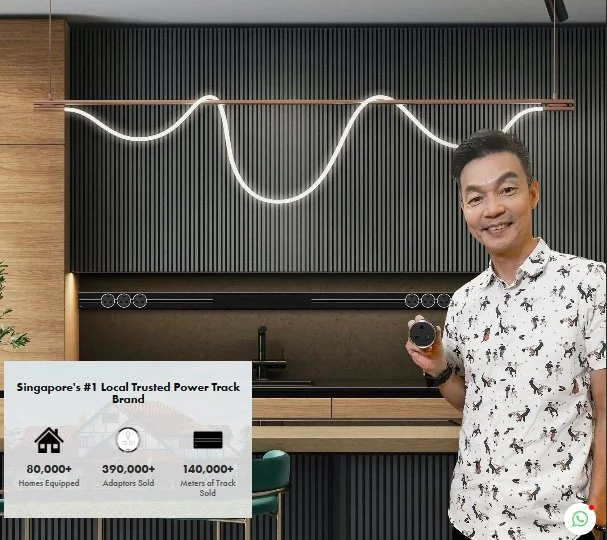
Marketing copy is cheap. Installed base is not. Line8 has manufactured and installed over 150,000 metres of power track in Singapore, with more than 450,000 adaptors in daily use across 85,000+ homes.
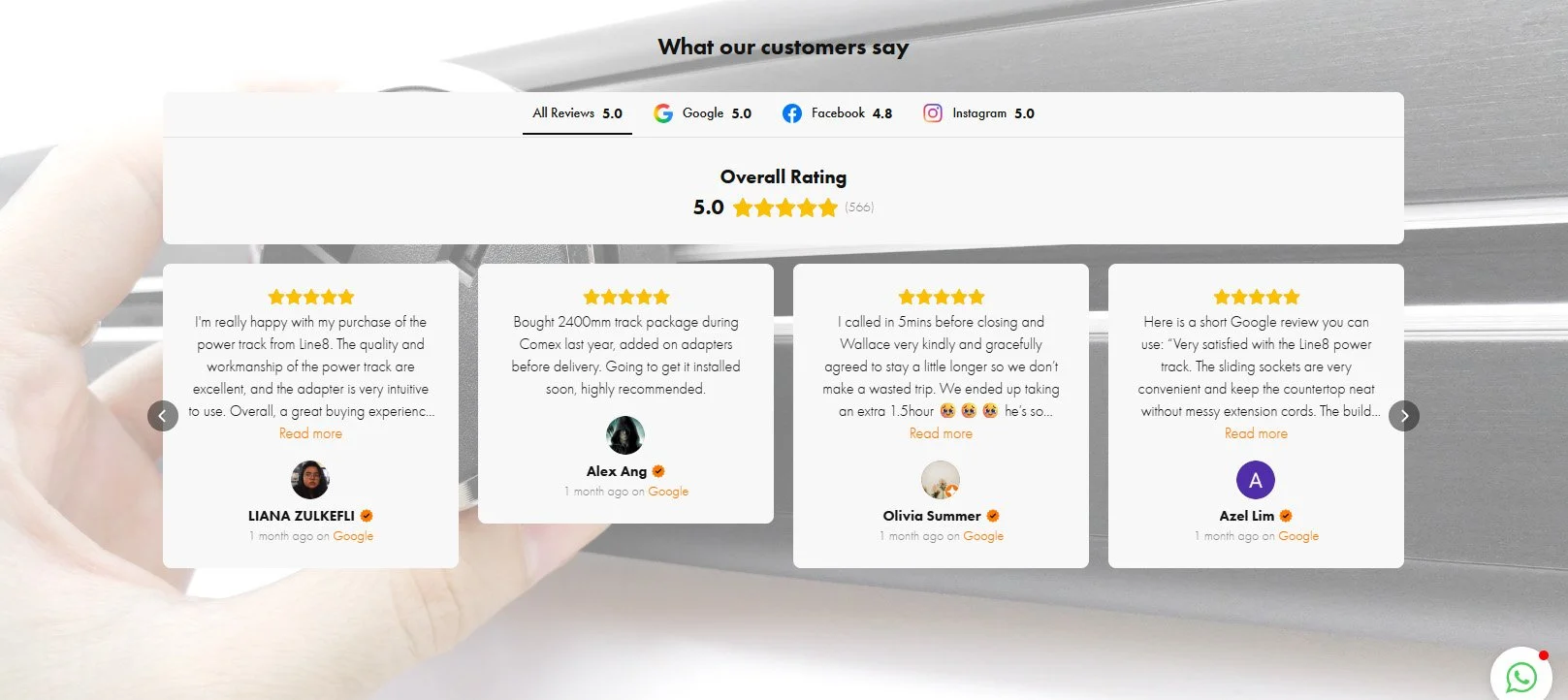
Customer feedback tells the same story. Line8 holds over 566 five-star Google reviews — a volume of verified public feedback that reflects both the size of the installed base and what people think of it once it's on their wall.
Made in Singapore, in the literal sense
Not assembled here. Not designed here and built elsewhere. Made here.
Line8 traces back to power rail work begun in 2000. Two decades of that expertise went into the system founded by Dr Kenneth Ong and Kevin Lim, which was awarded patent status in 2017 and now holds 11 worldwide patents. The original filings — PCT/SG2015/050203 and WO 2017/007420 A1 — cover the asymmetrical interlocking technology that underpins the entire safety architecture.
Production happens in-house at the Toh Guan facility: aluminium extrusion, conductor machining, injection moulding, surface finishing, and quality inspection. Nothing arrives as a finished OEM unit with a badge applied on top.
Why vertical integration matters
A rebadged importer can only sell what the OEM factory already makes. It cannot change the conductor alloy, redesign the interlock, cut a track to 1,247mm, or supply you a replacement conductor carrier in 2033. Line8 controls the tooling — which is precisely why the system is modular, custom-cut, and refurbishable.

Triple Redundancy Safety: three independent layers
The patented architecture that no competitor has matched.
Line8's safety design does not rely on one mechanism working. It relies on three, each independently sufficient. This is Triple Redundancy Safety (TRS).
1 · Asymmetrical Lock-and-Key
The track's resting state is always off, even when energised. Conductors are held apart in an open circuit — no current can flow. Only a genuine Line8 adaptor, correctly oriented, can close it.
2 · Active Grounded Shielding
Dual actively grounded aluminium Faraday shields cover all track openings, so any probing object meets earth, not live metal.
3 · Child-Safe Push-Pull Switch
Power requires a deliberate two-stage push-pull action. The adaptor also mechanically locks to the track while switched on, preventing removal under load.
Because the core system is fully mechanical with no electronics, there is nothing to fail electronically and nothing to draw standby power. An idle Line8 track consumes 0.0W. It also means longevity of the mechanical-watch kind — no capacitors to dry out, no firmware to abandon.
What a cheaper look-alike is actually risking
- Undersized earth conductors that can melt under fault current, leaving the appliance chassis unprotected exactly when protection matters.
- Reversed polarity. Bi-directional adaptors can be inserted upside-down, energising an appliance chassis even in the "off" position. Line8 adaptors are unidirectional only.
- No lock-and-key. Sprung plastic flaps degrade and crack over years of use, eventually exposing live parts.
- Non-compliant materials. Standard ABS instead of UL94 V0-rated PBT — a genuine fire risk under sustained load.

The engineering, component by component
| Component | Line8 Specification |
|---|---|
| Track body | Aerospace-grade anodised aluminium extrusion with asymmetrical lock-key core |
| Conductors | Pure Electrolytic Tough Pitch (ETP) copper, trapezoidal cross-section, full-length unjointed |
| Adaptor contacts | Single-piece phosphor bronze, machined — not stamped or riveted assemblies |
| Switch contacts | Pure-silver inlay |
| Adaptor chassis | Glass-fibre reinforced PBT, UL94 V0 fire rating |
| Conductor carrier | Xyron™ system — high thermal stability |
| Capacity | 32A continuous / 8,000W |
| Standby draw | 0.0W (fully mechanical) |
The single-piece phosphor bronze path deserves a moment. Most adaptors build their electrical path from several stamped parts joined together. Every joint is a resistance point, and resistance under load means heat. Machining the path from one piece of phosphor bronze eliminates those joints entirely.
R&D, in-house
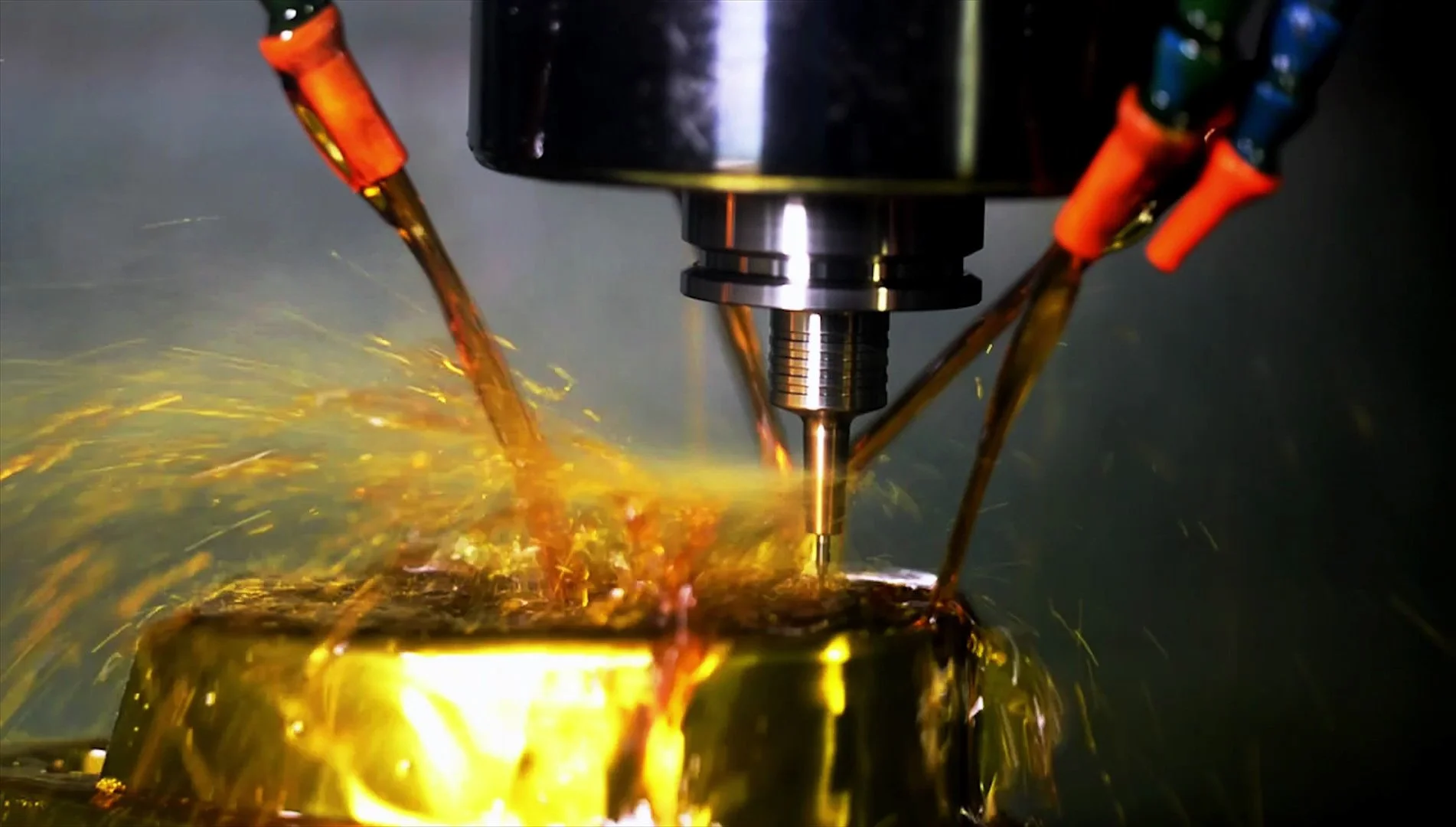
Owning the tooling means iterating without waiting on an overseas factory's production calendar. Computerised milling in-house allows rapid prototyping of new adaptors and track profiles. Line8's work with A*STAR optimised production to deliver precision-engineered components at substantially higher efficiency than conventional methods.
Certification
Line8 carries: Safety Mark (Singapore), SS241, SS145, IEC 61534-1, IEC 61534-21, IEC 60884-2-5, BS1363, BS5733, AS/NZS 3122, CE, ISO 9001, plus SIRIM (Malaysia), GMARK (Middle East) and RCM (Australia/NZ).
Safety Mark is the operative one for Singapore homes: it holds a Line8 track to the same standard as a fixed wall socket — a bar no ordinary power strip is asked to clear.

The Model SL: 25mm, without cutting corners
Slimming a power track is easy if you're willing to shed the earth conductor or drop the shielding. Plenty do. The Model SL reaches 25mm total depth — the slimmest on the market — while keeping a full-size earth conductor, an actively grounded enclosure, and a Faraday-shielded aperture. The enclosure was re-engineered rather than the safety spec reduced.
| Model | Type | Black Hairline | Colour Finishes |
|---|---|---|---|
| Model SL | Surface, 25mm, integrated LED optional | $0.279/mm | $0.333/mm |
| Model R | Recessed, min. 450mm billable, no LED | $0.279/mm | $0.333/mm |
| Model TL | Triangle light track, LED optional | $0.310/mm | $0.364/mm |
LED upgrades: 4000K white at +$0.045/mm, or RGBCCT smart at +$0.183/mm. Every track is cut to 1mm precision and hand-finished in one of 11 finishes: Black Hairline, Pearl White, Indian White Marble, Silver Hairline, Champagne Gold, American Spruce, Burmese Teak, Rose Gold, Galaxy Blue, Brazilian Rosewood, and Spanish Black Marble.
Fully modular — power, data and AV on one rail
The distinction between a product and a system.
Most power tracks are what-you-see-is-what-you-get: sockets only, sealed unit, no spare parts, no upgrade path. When one element fails, the track is scrap.
Line8 is a platform. All three tracks — SL, R and TL — accept the entire adaptor and faceplate range.
Premium Series adaptors
| Adaptor | Description | Certification | From |
|---|---|---|---|
| UKS-1 | 13A British socket | Safety Mark | $45.56 |
| MLT-1 | Universal travel (SG/UK/US/EU/AU) | IEC 60884 | $53.96 |
| AUN-1 | Australian socket | RCM | $45.56 |
Black or White bodies, with Diamond Silver, Medallion Gold, Obsidian Black, Protoss Blue or Rose Gold rings.
Zen Series
| Adaptor | Description | Price |
|---|---|---|
| UKS-Zen | British, LED ring, pack of 2 | $64.00 |
| MLT-Zen | Universal travel, LED ring, pack of 2 | $76.00 |
| MLT-WIFI | Tuya smart socket — Google Home & Alexa | $62.89 |
Smart feature adaptors
All powered directly from the track. No extra wiring, no bricks, no cables to the wall.
| Adaptor | Function | Price |
|---|---|---|
| CHG-65 | 65W GaN USB-C charger (IEC 62368) | $95.92 |
| sKope | 4MP QHD smart IP camera, 128GB storage | $168.00 |
| eKlipse-SENSE | mmWave ambient light | $95.92 |
| eKlipse | Ambient light adaptor | $32.00 |
| sKann | mmWave presence sensor | $88.00 |
| Protect | Surge protector, 13,500A triple-layer | $53.96 |
Multimedia faceplates
HDMI ($47.96) · USB 3.0 ($47.96) · CAT6A 10Gbps ($59.95) · Fibre optic ($59.95) · XLR mic ($59.95) · RJ45 data/tel ($39.57) · VGA ($33.57) · 3.5mm audio ($33.57) · Coaxial ($33.57) · 20A double-pole switch ($71.72).
Simultaneous AC + DC
Line8 delivers AC mains and low-voltage DC on the same rail at the same time — an application of Kirchhoff's First Law, and a world first for power tracks. That's what lets a 12V/24V smart camera, a radar sensor and a 13A kettle all draw from one track.
Smart home integration, at three levels
Every Line8 track — Model SL, Model R and Model TL — is fully smart-home ready.
Smart control on a power track usually means one thing: a Wi-Fi socket you plug in. Line8 approaches it as an architecture, with three independent layers of control that can be combined or used alone.
Track-level · Smart IoT Terminal
High-power control of the entire track from the end terminal. Wi-Fi with a solid-state switch — one command governs everything on the rail.
Adaptor-level · MLT-WIFI
Individual socket control. Each MLT-WIFI adaptor is independently addressable, so a single track can carry several separately switched outlets.
Lighting-level · SL-rgb
RGBCCT smart ambient lighting integrated into the track extrusion — full colour and colour-temperature control, addressable alongside the rest of your scenes.
All three are Tuya-powered and work with Google Home and Amazon Alexa. Add the sKann mmWave presence sensor or the sKope IP camera — both drawing DC directly from the track — and the rail becomes a sensing and automation surface rather than just a place to plug things in.
| Smart component | Controls | Price |
|---|---|---|
| Smart IoT Terminal | Whole-track, high power · Wi-Fi + SS switch | $107.91 |
| MLT-WIFI | Individual adaptor · Tuya | $62.89 |
| SL-rgb LED upgrade | Ambient lighting · RGBCCT | $183.12/m |
In Singapore, smart adaptors are for international and commercial use only. The Smart IoT Terminal and RGBCCT lighting are unaffected.
Refurbishable, not disposable
Because Line8 manufactures its own components, every part is a stocked spare: track core assemblies, aluminium cores, conductor carriers, pentagonal copper rods, 32A AC/DC end terminals, end caps, snap clips, cable restraints, fasteners.
Nothing here needs periodic replacement. But a Line8 track can be fully refurbished — when handing a home to a new owner, say — rather than ripped out and binned like a sealed OEM unit. Over a twenty-year ownership horizon, that is not a small distinction.
Packages and pricing
| Package | Tracks | Finish | From |
|---|---|---|---|
| 1.2m | Up to 2, custom length | Black Hairline | $438 |
| 1.2m Colour | Up to 2, custom length | Any of 11 finishes | $498 |
| 2m | Up to 3, custom length | Black Hairline | $768 |
| 2m Colour | Up to 3, custom length | Any finish per track | $868 |
The 2m packages are sized for the three areas that matter in most Singapore homes — kitchen counter, TV console, study — though you're free to use one, two or all three. All packages include a choice of Zen or Premium Series adaptors. Installation from $60.
Warranty: Lifetime on tracks and Premium Series adaptors. Three years on Zen power adaptors. One year on Zen feature adaptors and LED components.

Where to see it
Line8 is stocked at 25+ retail outlets and experience centres across Singapore, and distributed to over ten countries.
- Showroom & Factory — 34 Toh Guan Rd E #01-22, Singapore 608579. Ready-stock tracks in 600mm, 800mm and 1000mm available for same-day collection.
- Experience Hub — 42 Toh Guan Road East #01-82, Enterprise Hub, Singapore 608583.
Mon–Sat, 9:00am–5:00pm. Sundays by appointment. ☏ +65 9060 8017
Common questions
Do I need an electrician to add a socket?
No. Adding, removing or repositioning an adaptor takes seconds and requires no electrician. Initial track installation is a separate matter, from $60.
Why not just use a power strip?
A Line8 track is Safety Mark certified to the same standard as a fixed wall socket. A power strip is not — and its patented tap-off connection avoids the daisy-chain overloading that extension plugs invite.
Can I use travel or smart adaptors at home in Singapore?
No. In Singapore, travel and smart adaptors are for international and commercial use only.
What depth does the recessed Model R need?
Minimum 30mm, which accommodates two sets of electrical cables plus up to four Cat6 data cables. Greater depth is fine — the aluminium winged flanges support the track regardless.
Does Line8 work with Google Home and Alexa?
Yes. The Smart IoT Terminal, MLT-WIFI adaptor and RGBCCT ambient lighting are Tuya-powered and integrate with both. All three tracks — SL, R and TL — support them.
How many adaptors fit on a track?
A 600mm track accommodates up to eight adaptors.
The short version
Line8 is the only power track brand designed, developed and manufactured in Singapore. That vertical integration is what makes the rest possible: three independent patented safety layers instead of one, a 25mm profile that keeps its full earth, machined single-piece phosphor bronze instead of stamped assemblies, AC and DC on one rail, smart control at track, adaptor and lighting level, every component individually replaceable, and a lifetime warranty backed by the people who actually built it.
Build your track
Custom-cut to the millimetre. Eleven finishes. Made in Singapore, shipped to you.
Open Configurator Browse ShopAll prices in Singapore Dollars, inclusive of GST. Ex-Works from our factory in Singapore. Photographs are for illustration only. Line8 Pte Ltd reserves the right to change any price or photograph without notification. Contact our sales team, distributors or authorised agents for prevailing discounts.
In Singapore, travel and smart adaptors are for international and commercial use only.
© Line8 Pte Ltd · Made in Singapore

What is a Power Track and why do we need one?
The power track is the solution to the problem. There are certain areas like the kitchen, TV console and the study area that are difficult to perfectly predict the number of sockets and where to place them. For areas like these, we can cater for a power track to be installed during renovation. This track will be the infrastructure where we can then add as many sockets as we need anywhere along the track.

A Common Problem
Power tracks are a relatively new product category. Prior to its invention, we are accustomed to fit conventional power sockets around the home and office during renovation. Guessing how many sockets will be required and where to place them are a few difficult decisions we need to make.
The Makeshift Method
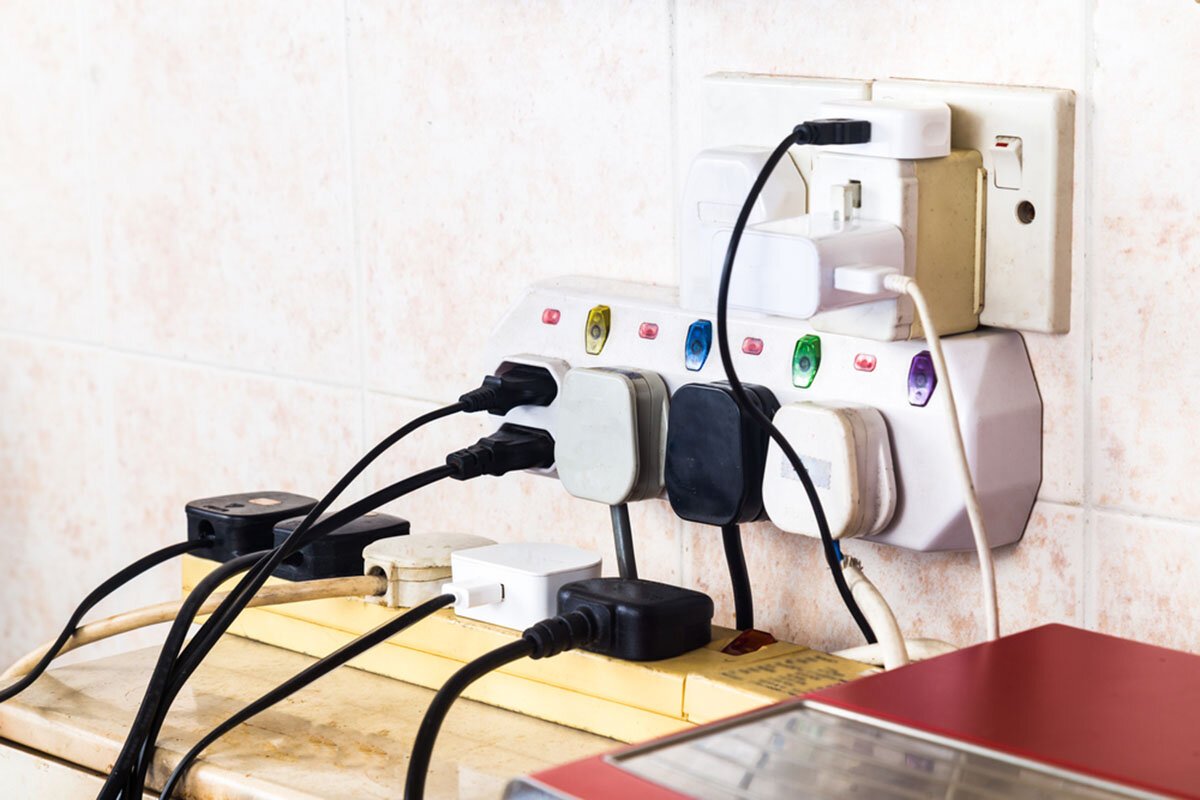
No matter how hard we try to predict there will always be not enough sockets and there will always be the socket that is at the wrong location. To solve this, we will then look towards purchasing one of these extension strips or these multi-plugs. They do help in easing the situation, but it is not a true solution. To add, these apparatuses are typically not as safe and also do not last as long and there are risks of overload if one connects too many appliances via these makeshift solutions.
The Power Track Solution

The power track is the solution to the problem. There are certain areas like the kitchen, TV console and the study area that are difficult to perfectly predict the number of sockets and where to place them. For areas like these, we can cater for a power track to be installed during renovation. This track will be the infrastructure where we can then add as many sockets as we need anywhere along the track.
Solving The Overloading Issue
The Line8 Power Track System utilises a patented tap-off connection that is the industry standard in electrical power distribution. Using the tap-off method that is synonymous with how a licensed electrician installs additional sockets to a home or office, the Line8 Power Track and adaptor connection prevent the overloading issue that plagues extension strips and multiplugs.
How to choose a power track
Now we all know that power tracks add a level of modularity and flexibility to our homes and offices. What makes a good power track and what are the factors we need to consider?
Reputable Brand
A reputable brand will ensure that the necessary components like switches and electrical conductors are made of quality materials. Necessary safety components like grounding and switches are not omitted.
Certification and Testing
Electrical safety is important and electrical products are one of the most regulated products. In Singapore it is mandatory that power track adaptors need to be tested to Singapore Standard certification and attain SAFETY MARK. On top of that, there are numerous other standards like British Standard, ISO and IEC.
Future support and availability
Installing a power track in your home or office means that additional sockets can be added in the future. However choosing a reputable brand will ensure that you can still purchase additional adaptors when you need them, many years to come.
Durability, Design and Materials
Power Tracks are precision-made devices that are pushing the boundary of modern material science. A properly designed power track is made to replace the big distribution box that we typically have in our homes and offices with something sleek and modern while having the same electrical capabilities. There might be other products that look like Line8 Power Tracks, but are actually just power extensions or multiplugs made to look like a power track and hence they don’t have the proper capability.
Warranty
Having a longer warranty covered by a reputable local company will ensure that you will have peace of mind while enjoying the benefits of the product and you will be able to get service when you need it.
Line8, a locally founded R&D and Engineering Company develops and manufactures the Line8 Power Track System. Our products have proven to be innovative and aesthetically pleasing in many of our customer's homes locally and overseas.
Learn more at : www.line8.com.sg
Want the full comparison? Our complete 2025 Power Track Buyer’s Guide covers safety certifications, pricing, and total cost of ownership across Line8, Eubiq, and Nexen.

The Inspiration Behind Line8 Power Tracks (Part 2)
Line8 uses the exact same type of connection the electrician or professional Electrical Engineer would have used to distribute power. only that we have converted the complicated wiring diagram into a simple twist mechanism.
So by adding a Line8 adaptor into the track. It's the same technically correct wiring method as how a professional electrician would have added a power socket on your wall manually.
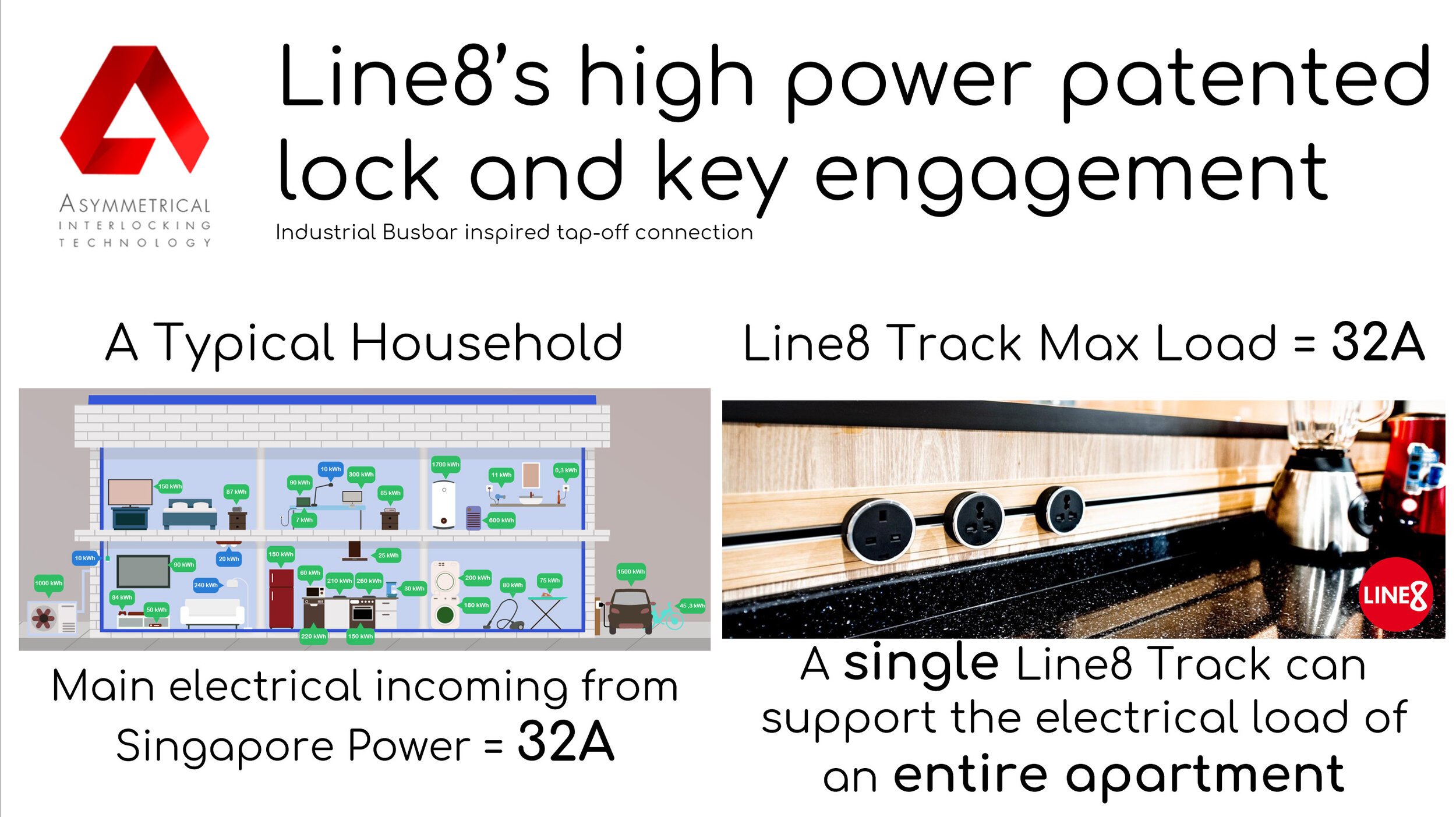
The power track concept takes its inspiration from the simple and common track light. The track light is a common fitting seen in many retail shops and even homes. With a simple track installed on the ceiling, we can now add, reposition and remove lighting points as and when we like. This is exceptionally useful when it’s difficult to plan the number of spotlights you need and where you need them during the renovation phase as the placement of subjects that need lighting.
The power track is a very similar invention in solving a very similar problem. The difference that we’re talking about electrical sockets here instead of spotlights. The features that separate these two products will be their safety and electrical load capability. Last week I touched on the safety aspect of the design and this week I will share more about the innovations behind the electrical load capability.
Power Loading Capability

The electrical power track is designed for users to be able to add, remove, and reposition power sockets freely and safely. The Line8 Power Track will be able to accommodate no less than 14 sockets per meter of track.
To be able to support a large number of sockets, a different kind of electrical connection must be used. This kind of connection is not as revolutionary as it is commonly used to distribute power throughout a building using an electrical bus bar as the power distribution device. The Line8 power track simply a miniature bus bar that has been designed and adapted for use in our interior space rather than in the electrical riser of a building.
All homes typically have a single big incoming electrical wire from Singapore Power that the electrician will then use to distribute it all around the home.
The method of connection the electrician will use to distribute the power throughout the house is called a tap-off circuit connection. This kind of connection is different from the ones typically found in the normal multi-plug or extension plug. That is why there will be an overload risk if multi or extension plugs is used. However, we are usually not as concerned about how many electrical points we are getting the electrician to add to your whole house.
For example, a 2 room flat and a 5 room executive maisonette has the same 40A electrical main cable from Singapore Power. But the 5 room will logically have a lot more plugs than a 2 room. But there is no overloading risk in the 5 room.
The Significance
The key to making that possible is the tap off electrical connection. It is also the same way our government distributes power to every household in a HDB block.

This is how a typical electrical bus bar look like
Line8 uses the exact same type of connection the electrician or professional Electrical Engineer would have used to distribute power. only that we have converted the complicated wiring diagram into a simple twist mechanism.
So by adding a Line8 adaptor into the track. It's the same technically correct wiring method as how a professional electrician would have added a power socket on your wall manually.
Line8, a locally founded R&D and Engineering Company develops and manufactures the Line8 Power Track System. Our products have proven to be innovative and aesthetically pleasing in many of our customer's homes locally and overseas.
Learn more at : www.line8.com.sg

The Inspiration Behind Line8 Power Tracks
The power track concept takes its inspiration from the simple and common track light. The track light is a common fitting seen in many retail shops and even homes. With a simple track installed on the ceiling, we can now add, reposition and remove lighting points as and when we like. This is exceptionally useful when it’s difficult to plan the number of spotlights you need and where you need them during the renovation phase as the placement of subjects that need lighting.
The power track is a very similar invention in solving a very similar problem. The difference that we’re talking about electrical sockets here instead of spotlights. The features that separate these two products will be their safety and electrical load capability. This week I will touch on the safety aspect of the design and I will share more about the innovations behind the electrical load capability next week.
Numerous people have asked me; what’s the inspiration behind the Line8 Power Track and what makes it stand out among other power tracks and the conventional power socket?

The power track concept takes its inspiration from the simple and common track light. The track light is a common fitting seen in many retail shops and even homes. With a simple track installed on the ceiling, we can now add, reposition and remove lighting points as and when we like. This is exceptionally useful when it’s difficult to plan the number of spotlights you need and where you need them during the renovation phase as the placement of subjects that need lighting.
The power track is a very similar invention in solving a very similar problem. The difference that we’re talking about electrical sockets here instead of spotlights. The features that separate these two products will be their safety and electrical load capability. This week I will touch on the safety aspect of the design and I will share more about the innovations behind the electrical load capability next week.
Safety

It is not easy to put a finger inside a track light as it is typically mounted on the ceiling; away from children and itchy hands. The power track different. It is typically mounted where it is accessible. Accessible for us to plug in, switch on and off and also to children and itchy hands.
To add, the electrical socket market is a lot more regulated with very specific safety standards and safety requirements since it has to safeguard against accidents, electrocutions, and misuse.
Line8 made the leap by inventing the TRS safety technology which is made possible by two actively grounded conductor strips flanking the openings of the power track that grounds everything that comes into contact with the opening of the power track.

Grounded means that if there's any leakage of electricity, it will be neutralized to ground instead of passing through the body of the person. This acts as an electrical shield for the person. It is The Faraday’s Cage Theory. Just that instead of putting the person in a cage, the power track is put in a grounded cage instead.
The two shiny metal strips on the opening of the Line8 track not only highlight and accentuate the design. It is also there to act as the Faraday’s Cage inspired electrical shield. This grounded shield will cage up all the components inside the power track which then shields the outside from any electrical leakage.
The Significance

The electrical shield in a power track is a fundamental technology. It is a required feature before any power track is placed within access to its users, children, and itchy hands. In fact, all competing power track brands (except Eubiq with their GSS invention) are not designed by electrical engineers. Without understanding the importance of this, they have omitted this critical feature from their products. Whatever safety feature they have claimed, having a grounded shield is the most basic and none of them seem to have featured such a technology in their design.
Line8, a locally founded R&D and Engineering Company develops and manufactures the Line8 Power Track System. Our products have proven to be innovative and aesthetically pleasing in many of our customer's homes locally and overseas.
Learn more at : www.line8.com.sg

The reason why power tracks need to be expensive & why would you want to pay more for your power track
The reason why power tracks need to be expensive & why would you want to pay more for your power track.
With the surge of popularity of the power track concept, it has caught the attention of numerous Chinese manufacturers. Similar to many other products, these new Chinese brands feel that they are able to produce something similar for cheaper. However, power tracks are not the common fast-moving consumer goods (FMCG). Power tracks are a highly engineered product that pushes the boundary of modern material sciences.

The reason why power tracks need to be expensive & why would you want to pay more for your power track.
With the surge of popularity of the power track concept, it has caught the attention of numerous Chinese manufacturers. Similar to many other products, these new Chinese brands feel that they are able to produce something similar for cheaper. However, power tracks are not the common fast-moving consumer goods (FMCG). Power tracks are a highly engineered product that pushes the boundary of modern material sciences.
Imagine, a single Line8 Power Track can carry the amount of power as an entire HDB or Condo apartment. Yes, everything in the apartment from the air-conditioning, all appliances, and lights in all kitchen, sitting area, and rooms…plug all that into one single Line8 Power Track and you haven’t overloaded the Line8 Power Track yet.
As much as it sounds impossible, it is made possible by the extensive use of High-performance thermoplastics (HPTPs). The Line8 Adaptor is made from a glass-fiber reinforced polybutylene terephthalate. This gives the Line8 Adaptor characteristics like V0-fire resistance, chemical resistance, high electrical strength, and high rigidity. The Line8 Power Track Conductor Assembly is made from a Super-Engineering Thermoplastic called Xyron (mPPE based) just to name a couple.
High-performance thermoplastics (HPTPs) - What are they and why are they important
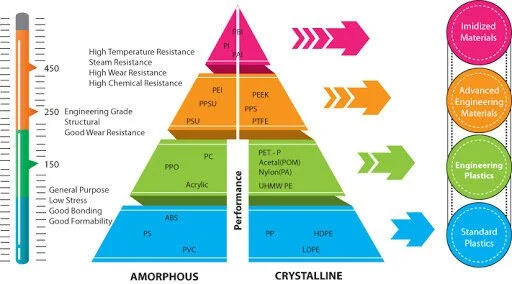
Pyramid of Thermoplastics
High-performance thermoplastics (HPTPs) are thermo-polymers that meet higher requirements than standard or engineering thermoplastics. They are high-priced, low-volume polymers that are sold for use in specialized applications that require a combination of extraordinary properties (the most important being that of high-heat temperature tolerance and performance).
The main applications for HPTPs are electrical/electronics, automotive, aircraft/aerospace, industrial (including oil and energy), and health (medical/dental)
Why are HPTPs important in Power Track Manufacturing
Power Tracks are high-precision, high load power distribution devices. They will need to withstand a much higher electrical load and provide much more electrical power compared to a standard wall socket or any regular electrical appliance.
This kind of design load is typically fulfilled by large and bulky bas-bar systems that distribute power around any building and city.
Having to miniaturize this same technical design into something aesthetically pleasing and sleek requires the use of special materials. Materials than can insulate much better, materials that can withstand much more load, materials that can provide the mechanical and electrical properties
Many have thought, why didn’t power tracks become popular much earlier? The answer to the question is because we didn’t have these HPTPs available for use back then.
Commonly used materials like Polycarbonate (PC), ABS (Acrylonitrile Butadiene Styrene), and Polyvinyl Chloride (PVC) are just not good enough for the demanding electrical and mechanical required to produce a power track.
Not all power tracks are made equal
In conclusion, not all power tracks are made equal. Being made in Singapore and with our access to high-tech manufacturing through our collaboration with A*Star SIMTECH. Topped off with the extensive use of HPTPs. Every Line8 Power Track is proudly made in Singapore with the best in manufacturing technology and material science. A power track is not something that we can replace easily like a poorly made electrical kettle for example. It is something that is permanently installed in your home, therefore it is important to fit one that is known to last.
https://en.wikipedia.org/wiki/High-performance_plastics#cite_note-Elias4-1
https://ihsmarkit.com/products/chemical-high-performance-thermoplastics-scup.html
https://www.a-star.edu.sg/simtech/industry/industry-collaborations
https://services2.hdb.gov.sg/webapp/BN31AWERRCMobile/BN31SElectrical?loadAction=electrical
Line8, a locally founded R&D and Engineering Company develops and manufactures the Line8 Power Track System. Our products have proven to be innovative and aesthetically pleasing in many of our customer's homes locally and overseas.
Learn more at : www.line8.com.sg

How safe are power sockets and tracks?
The conventional power socket has come a long way.
Plugs and sockets for portable appliances became available in the 1880s, to replace connections to light sockets with wall-mounted outlets.
Today there are about 20 types in common use around the world. They are mainly developed for both convenience and protection from electrical injury.

THE CONVENTIONAL POWER SOCKET HAS COME A LONG WAY
Plugs and sockets for portable appliances became available in the 1880s, to replace connections to light sockets with wall-mounted outlets.
Today there are about 20 types in common use around the world. They are mainly developed for both convenience and protection from electrical injury.
https://en.wikipedia.org/wiki/AC_power_plugs_and_sockets
The conventional electrical socket is the outcome of countless innovations backed with safety modifications learned from previous accidents.
Trying to reinvent the power socket means that we need to consider all the safety and technical features that are built into every electrical socket to ensure the safety of its users.
REINVENTING THE POWER SOCKETS WITH POWER TRACKS
A power track is a power socket replacement. It aims to replace the conventional power socket to add the much-desired flexibility and technology to this 140-year-old invention.
As power tracks only came into popularity in the last couple of years, the regulatory and safety bodies are still trying to catch up and set a safety standard for these new hybrid devices.
SO HOW SAFE ARE POWER TRACKS?
Safety is of the utmost importance as there is a real life-threatening risk when one gets electrocuted from a poorly design or manufactured electrical power track.
There is essentially no risk when the power track is designed and manufactured by a reputable engineering and electrical firm that is well versed with electrical safety and its designs.
A POWER TRACK IS NOT A CONSUMER ELECTRICAL DEVICE
Power tracks are currently viewed by many as regular consumer electronics and manufacturing firms of regular consumer electronics are coming in with their designs that don’t adhere to the strict safety and engineering standards of a reputable electrical engineering firm.
It is soon that the safety and certification bodies will catch up with unsafe products. However, there is a window of opportunity for these consumer electronic manufacturing firms to come in and make a quick buck with their designs which fail to adhere to the strict safety guidelines that reputable electrical manufacturing firms adhere to.
Things from the wrong use of conductor materials, use of low voltage components for high voltage application, use of cheaper materials like copper and brass instead of the more expensive silver and gold where the use of these materials are required, poorly design or non-existent earth conductors and grounded shields, just to name a few. Conventional power sockets seldom have these shortcomings because proper certification is required before it can be sold.
CHOOSING THE CORRECT POWER TRACK
A good power track needs to have the following
An adequate gauge of the electrical conductor to carry the rated current
Proper grounding for enclosures and housing
Earth contact has to be first to make a connection and last to disconnect and the resistance and contact quality and gauge needs to be equal to or more than the rated current
Well-engineered electrical path with as few as possible interconnects
Adequate cooling on all electrical conductors to prevent overheating in the event of overload
Overload protection to ensure that the load is less than the rated current of the power track
Durability and high MTBF for all mechanical and electrical components
Mechanisms which prevent or eliminate electrical arcing which will damage electrical contacts and raise resistance
Proper electrical switch design for the designed electrical load using precious metals to ensure a low resistance, corrosion-proof properties of the electrical switch.
Mechanisms to ensure the correct orientation and contact order of the electrical connection
Use of proper materials for insulators that have high electrical strength with good insulation properties with fire-resistance, heat resistance, and low wear properties.
Product Safety Tips for Consumers
http://www.scivee.tv/10-ways-to-protect-your-children-from-electrical-hazards/
https://www.ema.gov.sg/Electrical_Safety.aspx
For a deeper dive into choosing a safe, certified power track, see our complete 2025 Power Track Buyer’s Guide, which compares Line8, Eubiq, and Nexen on safety engineering and certifications.
Line8, a locally founded R&D and Engineering Company develops and manufactures the Line8 Power Track System. Our products have proven to be innovative and aesthetically pleasing in many of our customer's homes locally and overseas.
Learn more at : www.line8.com.sg
.png?content-type=image%2Fpng)